
- Key Takeaways
- Why Travel with Your Druze Community?
- Experience Unique Druze Hospitality
- Explore Sacred Druze Homelands
- Understand Core Druze Beliefs
- Taste the Soul of Druze Cuisine
- Bridge Generations Through Travel
- Conclusion
- Frequently Asked Questions
- What makes traveling with a Druze community unique?
- Can non-Druze travelers visit Druze villages and sacred sites?
- How can I respectfully experience Druze hospitality?
- What should I know about Druze beliefs before I visit?
- Is Druze cuisine suitable for vegetarian or special diets?
- Are Druze community trips suitable for families and older travelers?
- How can travel help connect Druze generations and the wider world?
Key Takeaways
- Community travel with the Druze builds a sense of cultural identity and belonging by experiencing stories and traditions that have meaning in the real world together. Group trips are comforting and secure for those who cherish journeying with folks who comprehend their lifestyle and faith.
- Exploring ancient Druze heartlands and mountain villages allows visitors to trace the footprints of the past and experience the essence of ancestral bonds. Arrange respectful excursions to mountain sanctuaries, cemeteries, and heritage sites and take time to reflect and learn.
- To be a guest of the Druze is to experience firsthand the importance of generosity, respect, and caring for the community. Take invitations to homes, tables, and gatherings, and watch as ordinary acts manifest profound cultural values.
- Druze community travel that includes group discussions on their core beliefs, the Seven Precepts and local teachings fosters greater appreciation and understanding. Schedule reflection, journaling, and question sessions for travelers to connect these principles to their own lives and decisions.
- A Journey Through Druze Cuisine, community, generational recipes, and local ingredients. We explore how food expresses identity, history, and place. Participate in cooking demos, visit markets or farms, and record recipes to share post-trip.
- Multi-generational Druze community travel spans generations and preserves this heritage for the youth. Design activities where elders and youth mingle, share stories, and plot upcoming trips together to ensure continuity and tight community bonds.
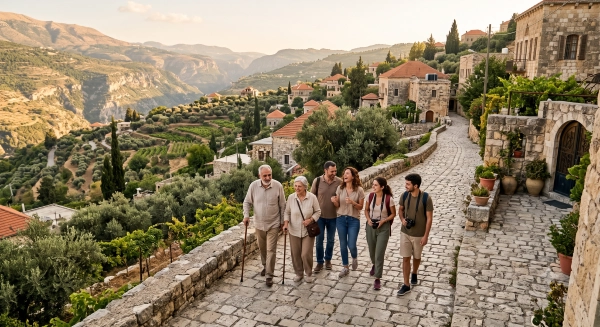
Druze community travel is about exploring areas inhabited by Druze populations and engaging with their traditions, beliefs, and lifestyle in an authentic manner. Travelers commonly encounter Druze communities in areas of Lebanon, Syria, Israel, and Jordan, typically in mountain towns and countryside villages. Trips are often peppered with home-cooked meals, guesthouse stays, and stops at local shrines, farms, and markets. Most hosts regale travelers with tales of Druze history, social customs, and tight-knit family bonds. Certain tours emphasize slow travel, small groups, and direct contact with local guides. To schedule Druze community travel right, it assists to be aware of fundamental manners, privacy standards, and attire regulations, which the subsequent sections discuss in additional detail.
Why Travel with Your Druze Community?

Traveling with your Druze. It’s a way to live your values, safeguard your culture and exchange experiences that are difficult to generate alone.
1. Deeper Connection
Traveling together allows more room for genuine time together than brief away visits or congested happenings. Long bus rides, shared rooms, or walks through a new city create opportunities for conversations that don’t fit into a busy week at home. A meal in a tiny village café or late night tea in a guesthouse can become a space where people calm the noise of their busy lives and truly listen to each other.
In a Druze group, all travelers bear much the same family tales, faith inquiries and social expectations. They feel safer to talk about these things on the road because everyday roles are suspended. A younger traveler might be more willing to query elders on questions of religious ethics or a member of the diaspora might get candid about what it means to maintain Druze values abroad.
2. Shared Heritage
Group travel helps bring Druze history to life. Touring shrines, ancient villages, or revered graves as a community provides common context. Individuals can interpret symbols, prayers, and traditions on site. For instance, pausing at a maqam with an insider guide from the community transforms a casual visit into a dynamic class.
Younger travelers see not only the place, but how adults behave there: how they dress, greet, and show respect. That real world example can stay with them longer than any lecture or blog post.
3. Lasting Bonds
Encountering mini travel ordeals, whether it’s a late bus or linguistic barriers and tackling them as a group tends to fast-track trust. They recall who kept their cool, who fixed things and who made them smile when plans shifted. It’s those moments that linger in your memory long after the journey has ended.
Several groups subsequently organize reunions, online meet-ups or new trips. The collective memories, like convening in a rented home to cook or assisting a local family with a minor chore, provide a foundation for continued connection.
4. Authentic Access
When you travel as a Druze community, community connections frequently unlock doors that individual visitors never lay eyes on. Hosts will occasionally welcome the group into private homes, seasonal gatherings, or local holidays where there are very few, if any, outsiders. This can range from traveling with a family for a home-cooked meal to sitting in on a mini-sermon.
Local Druze contacts can direct the gang to less famous gems, like a hilltop of historic significance or a tiny village market that specializes in one yummy morsel. These moments provide a sharper glimpse into day-to-day life and how Druze values manifest in actual routines.
5. Personal Growth
Even travel without leaving your Druze community can encourage each person to expand. Others will talk a new language for the first time in the wild, or plot out a day’s itinerary, navigate expenses, or assist grandparents across stairs. These deeds develop rudimentary but powerful skills in collaboration, compassion, and guidance.
Witnessing how Druze live elsewhere, or how non-Druze neighbors interact with them, can broaden horizons. Travelers contrast what they observe with their upbringing, sparking a subtle soul-searching about religion, morality, and selfhood that extends long after they return home.
Experience Unique Druze Hospitality
Druze hospitality revolves around trust, honor and unspoken giving. Guests are often received as if they were long-lost relatives, with simple but thoughtful acts: a chair pulled closer to the heater, a fresh pot of tea, small phrases of welcome repeated more than once. Such gestures are not dramatic; they are ingrained in the culture of daily life and represent fundamental values of respect, humility and caring for one another.
The Open Door
Soaked in uniqueness, the Druze hospitality is ready to welcome visitors on short notice in any of their villages in Lebanon’s mountains, the Golan Heights, or northern Israel. You may be welcomed in for strong coffee or herbal tea even if you came just to ask for directions.
Hospitality is not just for good friends. One’s neighbor, a stranger, a traveler — all could be given the offer of a seat, a drink, and occasionally a meal. It tears down the barrier between “insider” and “outsider” and provides guests with an immediate feeling of social belonging.
There’s symbolic power in food and shelter. To break bread, olives or a humble lentil dish are often signs of trust and desire for peace between host and guest. In the villages, providing a stranger with a night’s shelter or at least seeing that they depart well-fed stems from the conviction that looking after one another keeps everyone safe.
You become captivated by witnessing the generations involved. Elders host the greetings, youth serve the family members, and kids are coaxed to say hello. You see how hospitality becomes a social adhesive. It teaches everybody not to be selfish and to stand by the community.
A Seat at the Table
Meals in Druze homes are often a communal affair with food laid out in the center for all to enjoy. Visitors can relax on pillows or around communal tables, sharing dishes of rice, stuffed veggies, flatbread, and seasonal salads. The pace is leisurely, allowing for true dialogue.
A lot of the recipes are family heirlooms. A grandmother’s touch in molding sambusak or the herb mixture in a wild thyme salad can distinguish one home from another. The ingredients are often sourced from nearby fields or gardens, which connects the meal to the local land and seasons.
Prior to the meal, certain households utter a short prayer or mutter a hope for wellness and protection. In other cases, the ritual is more subtle: the host invites guests to start first or insists they take the choicest portion. Observing who serves, who speaks, and who waits is an introduction to how respect and modesty interact at the table.
Visitors are typically encouraged to consume more than anticipated, though gracious decline is embraced when offered with thanks. Easy gestures, such as tearing bread with your hands rather than slicing it, not clearing your plate entirely, or praising a particular dish, demonstrate that you respect and appreciate the local culture.
Stories and Wisdom
Evenings tend to drift from food to talk, with the elders quietly taking charge. They might discuss village life, migration, or wars and alliances with neighbors, providing a tangible backdrop to the Druze image of toughness and faithfulness.
Short sayings and proverbs are dotted throughout these talks, such as to be a man of your word, respect guests, or be humble about your knowledge. Such sayings abound with significance, particularly regarding the Druze focus on cohesion, truth, and accountability.
Our hosts are happy to answer questions about Druze history and beliefs while maintaining the privacy of sacred teachings. Discussions might address topics such as reverence for other religions, the importance of learning, or the obligation to defend your people. The tone is typically mellow, reflective, and based on real life rather than abstraction.
This ceaseless torrent of oral history is an essential instrument of ethnic persistence. In such dispersed communities, stories contribute to binding community identity, particularly for youth who straddle ancestral village life and contemporary work or study abroad.
Explore Sacred Druze Homelands

Discover Sacred Druze homelands spanning rugged hills and bountiful valleys in regions like Mount Lebanon and the Galilee. So much memory, daily life, and silent worship are layered into them that to journey here is to move through a living landscape rather than a point on a map.
Mountain Sanctuaries
Highland shrines and prayer houses often perch above terraced fields and pine woods. Many visitors describe a marked calm there: muted sounds, slow village rhythms, and simple whitewashed buildings that hint at older ritual use. Trails wind around ancient olive trees to mehitothes where Druze convene for worship, discourse, or communal discussions, including non-publicized religious feasts.
| Sanctuary Type | Typical Location | Role in Druze Life |
|---|---|---|
| Hilltop maqam (shrine) | Ridges of Mount Lebanon | Focus for prayer, vows, and quiet visits |
| Rural prayer house | Near orchards or fields | Space for study circles and religious teaching |
| Forest retreat area | Mountain slopes in Galilee | Informal spot for reflection and group gatherings |
These sites hold importance less for grand buildings and more for what has happened there over time: secret meetings during periods of persecution, safe spaces for dispute resolution, and ongoing religious learning. Those who join a group meditation or silently sit in a courtyard often discover the setting itself molds the experience, so long as they observe local markers, cover hair and clothing modestly, and refrain from photos in sensitive zones.
Historic Villages
Several of Druze villages climb up precipitous hills, with cramped alleys and stone steps that illustrate how settlements adjusted to rugged landscapes. Strolling through sites such as these, you’ll encounter communal ovens, water cisterns, and small guest rooms that once welcomed visitors and intellects.
Architecture can feel both plain and intentional: thick stone walls for insulation, flat roofs for drying produce, and shaded inner courtyards for family life. Community centers or cultural houses may display old tools, traditional dresses, or early 20th-century photos, telling you how farming, herding, and trade shaped the day-to-day hustle.
Speaking with Druze villagers, when they open up, often provides the most vivid glimpse of life in their mountain communities. Older locals might remember war stories, collaborating with neighbors of different faiths, or how roads and modern work altered their way of life. If they allow it, you can capture these tales or perhaps draw a village square, a notable archway, or an ancient olive press to maintain your own quiet, reverent documentation without reducing the visit to a tourist shoot.
Ancestral Footsteps
When you trace ancestral paths in Druze homelands, you observe how families migrated from mountain bastions to more secure valley dwellings and vice-versa due to changes in politics, drought, and trade routes. Guides or local historians might indicate passes that were once used for seasonal moves with flocks or ridges that acted as natural borders between clans.
Cemeteries on slopes just beyond the villages have family names that reoccur on shop signs and house plaques. Unadorned stone tablets might not illustrate a lot, but they echo unbroken lineage and soil, particularly when nestled adjacent to ancient memorials dedicated to dignitaries, sages, or fallen soldiers.
Museums and small heritage rooms can assist visitors in charting a path that connects shrines, village centers and important migration corridors into a single journey. When younger travelers accompany, storytelling from relatives, the local elders or the guides can connect each location to a particular family incident or familiar ancestor, making such “history” tangible and intimate.
Understand Core Druze Beliefs
Knowing some core Druze beliefs helps you interpret the social “rules” of Druze villages and guest rooms and provides context for how hosts might plan food, host guests, or establish boundaries during your visit.
The Seven Precepts
The Druze adhere to a set of seven core precepts that govern ethics, faith, and community and are typically instructed through example rather than open sermonizing. Visitors primarily experience them in the way individuals entertain visitors, respect boundaries, and care for the vulnerable.
- Loyalty to one God and to core principles
- Protection and mutual support within the community
- Respect for others’ dignity and property
- Honesty in speech and trade
- Rejection of violence and betrayal
- Moral self‑control and responsibility
- Commitment to spiritual learning and wisdom
These concepts manifest in everyday life. Hosts will want to feed their guests well, even if they are of modest means, because taking care of visitors is an ethical responsibility, not a kindness. Community members will step in quietly to help families by sharing harvests or banding together to raise a medical bill, for example, in keeping with the obligation to safeguard one another.
Group reflection while traveling can make these precepts feel less abstract. In a small circle at the end of the day, you might ask: How did we see honesty or mutual support play out today? How do our home cultures deal with loyalty or non-violence?
To keep the precepts clear for everyone, sketch a simple chart: one column for the precept, one for a plain description, and a third for a concrete example from your visit. This serves great as a handy cheat sheet for a tour group.
A Philosophy of Life
Druze belief is less about public ritual and more about a way of living that weaves spirituality into ordinary acts: work, family ties, hospitality, and conflict avoidance. For most Druze, the world is a domain to exercise righteousness, not avoid, so religious life and common obligation remain near.
It places great emphasis on wisdom, truth, and self‑improvement. Not all of the community engage in studying sacred texts, but even the unstudious are brought up to value serene reasoning, careful speaking, and continual education. A farmer who strikes considered bargains at market or a teacher who mediates an argument without humiliating either student might be considered embodiments of this wisdom in action.
While on the road, these concepts materialize in vignette. You may observe a calm, deliberative discussion applied to settle a traffic disagreement instead of yelling, or elders directing cousins on work or marriage decisions via extended dialogue, not commands. Comparing this with more individualistic cultures can ignite productive questions about patience, obligation, and sustained perspective.
To turn this into personal insight, travelers can keep a short daily journal: note one situation that showed Druze patience or truth-seeking, then ask how you might handle a similar moment at home. Group discussions at night can expand this, as various travelers may interpret the same event in different manners.
Respectful Engagement
About: Know fundamental Druze values. Courtesy is at the heart whenever you participate in Druze occasions, be it a family dinner, a village festival or an outside shrine pilgrimage. While guests are generally received with great warmth, hosts anticipate guests to tread carefully, eschew boisterous demonstrations and adopt the local rhythm rather than force their own.
Dress codes do count, particularly in the vicinity of holy places or in the presence of seniors. In general, this translates to covered shoulders and long pants or skirts in muted colors. Hosts may request that guests remove shoes in some areas or refrain from pictures. Checking ahead of time, “Is my outfit alright for where we’re going?” demonstrates consideration and deescalates stress.
Insightful questions establish credibility. Instead of ‘Why don’t you share all your beliefs?’ a nicer phrasing would be ‘Are there parts of your faith you feel comfortable explaining to visitors?’ This leaves room for privacy, which is crucial in a tradition that maintains some teachings esoteric.
Seasoned travelers can demonstrate this approach for the class. Walk with your hosts, pause your own side-jokes during introductions, tuck your phone away in prayer halls, and politely nudge others to do so as well if necessary. These little gestures indicate that you respect Druze culture, even for just a brief visit.
Taste the Soul of Druze Cuisine
Food in Druze communities doubles as both routine and silent ritual, connected to land, spirituality and kinship.
- Flatbreads such as saj and dishes with bulgur wheat indicate a farming heritage, where grains kept well and fed extended families.
- Herbs like za’atar, wild thyme, and sumac connect meals to local hillsides and foraging customs.
- Olive oil, olives, and labneh speak to a Mediterranean climate and generations of nurturing olive groves and dairy herds.
- Slow-cooked stews with lentils, chickpeas, or fava beans indicate reverence for humble, hearty staple food that satiates multitudes.
- Coffee with cardamom and sweet pastries with nuts and syrup signify hospitality and formal visits.
Generational Recipes
- See if hosts will allow you to jot down every step or capture short clips as they cook. Note small choices: how long dough rests, how fine onions are chopped, when spices go in, and how heat is managed on the stovetop. These mini techniques so rarely surface in written recipes, but they sculpt texture and flavor and allow you to reproduce that dish later with more precision.
See how senior chefs tackle a taboon oven to bake bread. Observe how they form the dough, how near they get it to the hot stones, and how they gauge the fire by sight and smell instead of a timer.
Once back, compile your notes and shots into a communal online folder or printed booklet. Add the chef’s name, village, and any anecdote associated with the dish. Turn the recipes from each host into a mini-group cookbook you can share with your travel group or family.
Communal Feasts
At village feasts, meals frequently extended across lengthy tables or communal cloths on the floor — giant platters of rice and meat, salads, mahshi, and bread within arm’s reach of dozens.
To eat shoulder to shoulder, handing plates and watering or tea for one another is to demonstrate affection and communal appreciation. It’s not about presentation; it’s about making sure everyone eats well, even last-minute guests.
Look closely at the range of dishes during holidays or weddings. One table may hold grilled meats. Another may hold tabbouleh, fattoush, stuffed grape leaves, pickles, and yogurt dishes, all built to balance richness, acidity, and freshness.
Volunteer to assist with easy chores like washing greens, molding the kibbeh, or setting tables. These communal tasks demonstrate the many hands that make Druze feasts tick and provide a transparent insight into how responsibilities are divided and coordinated with minimal formal training.
Local Ingredients
- Make a list of key tastes to search for: freekeh (smoked green wheat), goat yogurt, grape leaves, pomegranate molasses, wild herbs, and local cheeses. Supplement with actual dishes that utilize them, such as freekeh soup, stuffed grape leaves, or labneh drizzled with olive oil and za’atar, so you know what to request by name.
Drop by small markets, roadside stands or family farms to discover how olives are pressed, how herbs are dried, or how cheese is made. For me, seeing these steps in person connects every plate to dirt, to clouds, and to hours in the sun.
Get local farmers and home cooks to share tips on when things are in season and how they prevent waste, drying herbs, pickling veggies. These discussions frequently exhibit a robust tendency to consume what the earth provides in a moment, a characteristic that encourages more ecologically sound decisions.
Swap the recipes you picked up and anecdotes from dinners with friends and family back home. See how these dishes transform when you make them with your own local ingredients.
Bridge Generations Through Travel
Travel in and around Druze communities can accomplish more than exhibit landscapes and sites. It can serve as a common ground where the elder and the younger generations teach each other, not just in principle but in practice.
Create experiences that bridge generations of travelers. Organize mixed-age walking tours through villages instead of dividing by age, and matchmake so that every group has a minimum of one old and one young traveler. While on long bus rides, organize ‘topic rounds,’ where each pair exchanges perspectives on predefined topics, for example, food, work, or religion and life. Include low-strain tasks that different ages can lead. Younger travelers can handle map reading or language apps, while elders can guide when visiting shrines, historic homes, or family-owned farms. Make sure you incorporate rest points, like brief tea breaks every one to two hours, so the older travelers remain comfortable and you all have a moment to chat rather than race.
Bridge generations through travel. Bridge generations through travel. One evening in a guesthouse, have elders from the Druze community recount short stories of migration, service, or village customs. Then have younger travelers share what seems similar or different in their own lives. Mix in easy call and response songs or folk tunes with contemporary tunes so no age group owns the vibe. Bring card games or easy word games that require no special equipment and function in any language. Think memory games about the day’s route or items seen in the market.
Emphasize the experience of learning from your elders while discovering new places. At a Druze shrine, mill, or orchard, have an elder guide describe why the place matters. Then allow younger travelers a few minutes to question directly about change, land, or work. Capture quick voice memos or notes with permission to compile a shared archive that young folks can hold onto and return to.
Bridge generations through travel and instill community pride. Frame each trip as part of a longer chain: elders pass on skills like making traditional dishes or reading old gravestones. Younger travelers handle digital maps, trip planning, and photo logs that keep the record alive. Leverage communal activities, such as making a family meal, connecting the family tree to a certain village, and charting paths of migration to demonstrate that every generation shares a piece of a single narrative, not individual ones.
Conclusion
To journey with a druze caravan is more than a journey. You sleep in real houses, eat plain meals, and listen to vivid stories. You walk in hills and towns with deep family connections and spiritual foundations. Druze community travel means you experience with your eyes, not only your ears.
With youth, parent, and grandparent, the path becomes common territory. The bus ride becomes a lesson. A meal becomes a connection to years gone by. A chitchat with a host can wash away ancient suspicions.
For your next getaway, consider a Druze guided tour or homestay. Ask one clear thing: “How will this trip bring me closer to the Druze story?” Let that steer your decision.
Frequently Asked Questions
What makes traveling with a Druze community unique?
Traveling with a Druze community is often a mixture of cultural education, holy shrines and communal feasts. Visitors can enjoy intimate social life, local culture and community-driven perspective that is nearly impossible to access on your own, honoring privacy and religious restrictions.
Can non-Druze travelers visit Druze villages and sacred sites?
In most destinations, non-Druze travelers are accepted in villages, souks, and guesthouses. Certain religious sites and rituals are closed. Local guides or community hosts can tell you what is open to guests and what is respectfully off limits.
How can I respectfully experience Druze hospitality?
Dress conservatively, inquire before snapping images, and stay in step with your hosts. Accepting coffee or tea is generally appreciated. Listen more than you talk when it comes to sensitive subjects, and don’t push for information about private faith rituals or thoughts.
What should I know about Druze beliefs before I visit?
The Druze religion is monotheistic and originated from Islam, philosophy and other older beliefs. Much of the teachings are private. Picking up some basic history, values such as loyalty and honesty and respect for elders demonstrates thoughtfulness when you go and visit.
Is Druze cuisine suitable for vegetarian or special diets?
There are a lot of Druze dishes that revolve around plants — grains, legumes, vegetables and olive oil. There are usually vegetarian and some special diet choices. If you’re allergic or restricted, warn your host or guide early so they can recommend appropriate foods.
Are Druze community trips suitable for families and older travelers?
Most Druze community tours are appropriate for families and senior travelers, as they emphasize culture, cuisine, and history rather than adrenaline-fueled activities. Verify walking distances, terrain, and climate ahead of time, and opt for itineraries with flexible schedules and comfortable transportation.
How can travel help connect Druze generations and the wider world?
These communal journeys give young and old Druze the opportunity to discover heritage in unison as they interact with travelers from different backgrounds. This may help fortify identity, inspire language learning, and foster goodwill between the Druze community and visitors from around the world.
Popular All Inclusive Vacation Destinations
Popular Adventurous Destinations for Families and Groups
For added information, you may check these resources:
Travel Advice & Entry Requirements (Canada)