
- Key Takeaways
- Why Choose a Destination Wedding
- Your Destination Wedding Budget
- Navigating Legal Requirements
- The Currency Conundrum
- Coordinating Guest Travel
- Our Seamless Planning Process
- Offer expert coordination from certified destination wedding specialists for every step.
- Provide exclusive wedding packages tailored to your desires and budget.
- Deliver personalized support, from venue selection to day-of logistics, ensuring a relaxed planning experience.
- Guarantee a memorable, stress-free celebration with dedicated planners and curated vendor partnerships.
- Conclusion
- Frequently Asked Questions
- Is Canada a good choice for a destination wedding?
- How much does a destination wedding in Canada cost?
- What legal steps are required to get married in Canada?
- How do we handle different currencies and payment methods?
- How can we coordinate guest travel smoothly?
- What is the best time of year to marry in Canada?
- How does your planning process make it easier?
Key Takeaways
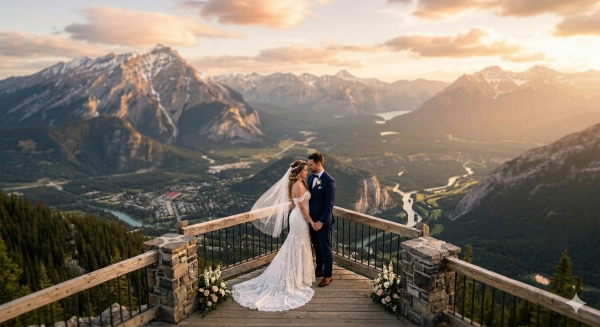
- Destination weddings in Canada offer diverse settings and styles, from Quebec cityscapes to the Canadian Rockies, with venues that suit romance and adventure. Think about all-inclusive and certified planners to streamline decisions and timelines.
- Intimate celebrations go perfectly with a smaller guest list and private venues such as a mountain lodge or lakeside resort. Personalize vows and details to make it special for you and your guests!
- Local culture and landscapes make for standout moments with regional cuisine, outdoor ceremonies and iconic photo backdrops like Niagara Falls. Coordinate guest activities, such as tours of the vineyard or scenic hikes, to make the trip more special.
- A comprehensive budget keeps venues and vendors in line, as well as travel and accommodations, while factoring in the seasonality of pricing at locations like Banff and Victoria. Establish a contingency fund and track currency fluctuations to maintain expenses in line.
- Get legal aspects down early by checking with local laws, officiant regulations and documentation requirements. Then obtain necessary certificates and translations so that your marriage is recognized in Canada. Maintain certified copies and deadline checklists for delays.
- Simplify travel for your guests with group bookings, organized communication, and a collaborative itinerary featuring events, maps, and tips. Designate a point person or coordinator to field real-time questions and logistics.
Destination weddings Canada are weddings held outside of the couple’s home city, spanning Canada’s breathtaking landscape from coast to coast including places such as British Columbia’s coastline, Alberta’s Rocky Mountains, Ontario’s wine country, Québec’s historic sites and the Atlantic provinces. Couples are choosing Canada for its scenic venues, dependable services and direct travel connections from major hubs. Every province has its own legal marriage rules, typically requiring ID, a license and two witnesses. High season is June to September and there are winter snow options from December to February. Typical budgets range widely with venue, travel and lodging being main costs. For planning with less stress, the sections below discuss locations, seasons, legal procedures, budgets and guest tips.
Why Choose a Destination Wedding
Canada has three very different backdrops: Old World charm in Québec City, ocean vistas near Vancouver, and glacier-fed lakes in the Rockies, so couples can pair place and personal meaning. Venues can be anything from majestic hotels to gentle alpine meadows. Weather matters, so timing drives choices such as mild summers in British Columbia, crisp autumn color in Québec, and snow-kissed winter scenes in Banff. As an added bonus, many resorts package planning, accommodations, and events, which helps to keep costs in check and makes the wedding more of an extended, relaxed vacation for you and your guests.
Intimate Celebrations
A destination wedding naturally cuts down the guest list by default. You pick and choose the people who will make the journey, which puts a premium on time spent with close family and real friends. It’s an organic filter and a geographic leveler when family and friends reside at a distance.
Select a cozy venue that matches that vibe. Go to Lake Louise in winter with your own private lounge reception, a cedar lodge near Whistler, or a secluded cove on Vancouver Island. In smaller spaces, private vows and custom menus feel personal and not staged.
Elopements and micro-weddings work in the Rockies. Emerald Lake Lodge, with its lakeside decks overlooking emerald water and peaks, provides a beautiful setting. A brief photo hike at sunrise becomes portraits you’ll cherish forever. The day moves along at a leisurely tempo, not squeezed into a jam-packed four-hour chunk.
Unique Experiences
Local flavor gives it dimension. In Québec, have regional cheese, maple-infused shakes and a bilingual ceremony. In Nova Scotia, combine a maritime menu with some fiddle music. If your narrative leans international, some couples arrange cultural experiences on a subsequent journey, like a Mayan ceremony in Mexico or a Maasai blessing in Tanzania, within the context of a larger celebration arc.
Adventure options pop. Reserve a mountaintop ceremony by gondola in Banff, a helicopter elopement on a glacier near Golden, or vows by a secluded Pacific beach at low tide.
Photos cement the memory. Niagara Falls mist, Moraine Lake’s Ten Peaks, or Atlantic headlands near Peggy’s Cove provide crisp, iconic backdrops.
Guests remain occupied with wine tastings in the Okanagan, hot air balloon rides over the prairies, or simple city tours in Montréal and Vancouver.
Simplified Planning
Let certified destination planners take care of permits, travel timelines, and vetted vendors. This reduces danger in far-flung parks or monuments.
All inclusive packages bundle venue, food, bar, décor, and rooms. One bill means less shock and frequently more affordable overall if the journey becomes a vacation for two.
Use a wedding site with group codes and RSVP itineraries. Easy notes on weather, dress, and transport cut down back-and-forth.
Giant resorts and iconic lodges have strong supplier relationships, too, so setup is smooth and timelines are tight even in high season.
Your Destination Wedding Budget
1. Venue & Vendors
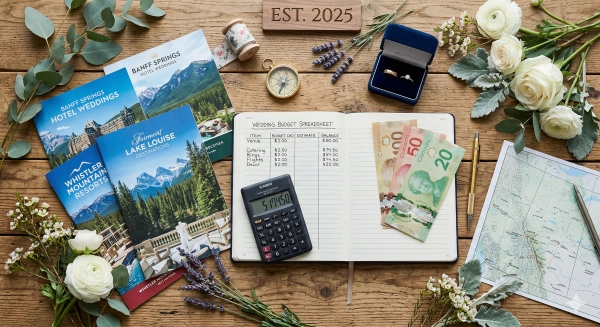
Begin with a side-by-side analysis of all-inclusive resort packages versus à la carte. Packages in resort areas include the venue, basic décor, cake, and coordination. Some even waive base fees when your group books a minimum number of nights, which can cut costs fast. À la carte is great in Banff or Victoria if you want those niche vendors or a custom look, but the labor, rentals, and logistics start to add up.
List must-haves first: photographer, floral design, sound and live music. Then tier the rest as “nice to have.” During sought after summer months in Banff or long weekends in Victoria, holds are being secured 10 to 12 months out to keep from surge pricing. As a point of comparison, the average Canadian wedding costs approximately 30,000 to 42,000 CAD. Many destination groups of 40 to 50 persons come in under 10,000 CAD on smart bundles and off-peak dates.
Negotiate group rates for guest room blocks and ask for concessions. These include waived venue rental with food and beverage minimums, upgraded chairs or lighting, or a complimentary rehearsal space. Construct an easy-to-reference comparison chart with columns for package inclusions, per guest pricing, service fees, and overtime rates so you can get a feel for true totals.
2. Travel & Stay
Include flights, baggage, airport transfers, shuttles and ride-hails. If you can book direct flights to Toronto, Montreal, or Vancouver, you will find that direct flights tend to minimize delays and missed connections. A group air contract can lock fares, hold seats and allow names later, while a hotel block protects rates and room types for families.
Post a one-page ‘travel guide’ with airports, best routes, shuttle links, and 2-3 hotel tiers. Add transit notes for winter in the Rockies and ferry schedules if guests make it all the way to Vancouver Island.
3. Guest Experience
Save a small budget for welcome bags with local snacks, a printed schedule and emergency contacts. Organize one group activity; think Lake Minnewanka cruise or Butchart Gardens visit, then leave the rest optional. Mail accommodations early with cut-off dates and mention any accessibility information, such as step-free transit or cribs. It’s those little touches that make a difference, and clarity saves both money and stress.
4. Legal & Admin
Budget for license fees, park or beach permits, and certified copies of certificates. If papers require translation or notarization, include those line items along with courier fees and any apostille expenses for international validation. Track deadlines on one calendar to avoid incurring rush charges.
5. Contingency Fund
Reserve 5 to 10 percent for surprises, which is $1,750 to $3,500 in a $35,000 CAD plan. Weather pivots in Banff might require tents or heaters, and vendor switches can drive up rates. Mind currency fluctuations if paying cross-border and budget for a handful of plus-ones. Keep a checklist and update balances weekly.
Navigating Legal Requirements
These legal steps dictate the schedule, expense, and format of a destination wedding in Canada. Navigate legalities 12 to 18 months out to hit filing windows, get flights, blocks and group rates, and documents that may need translation, notarization, or country stamps.
Local Marriage Laws
Verify residency guidelines, waiting periods and ceremony restrictions specific to your country of choice or Canadian province. Some compel you to show up days beforehand or impose a waiting period before the license becomes effective. Some destinations provide just symbolic ceremonies at resorts, while others facilitate totally legal weddings with country-specific fees and paperwork.
Find out who’s allowed to legally marry you. In Canada, a ceremony has to be performed by a registered officiant and most provinces require at least two witnesses. Overseas, a civil officer at city hall is needed for legality, then a different religious or symbolic ceremony is needed for style.
Get witnesses in place early. If you elope, have your planner or venue supply them. Most resorts can provide for two adults, however, confirm identification regulations.
Check traditions that influence style, such as wording, location restrictions, or restrictions to outdoor lawful ceremonies. Certain city halls will limit guest counts or need weekday appointments exclusively.
Canadian Recognition
Make sure your foreign marriage is valid in Canada. Canada will generally recognize a marriage that was legally performed in another jurisdiction, provided it is valid under local law and does not contravene Canadian capacity rules.
Obtain the actual marriage certificate from your local vital records office, not just the souvenir from the ceremony. If the certificate is not in English or French, organize a certified translation. Certain countries need an apostille or consular legalization.
Back in Canada, retain the certified certificate for name changes, benefits, taxes, and so on. A quick note: while most provinces don’t actually re-register foreign marriages, agencies will request originals or certified copies.
Build a simple path: secure the local certificate, order extra copies, add translations, and store digital scans.
Required Documents
Collect: passports valid for 6 to 12 months, long-form birth certificates, divorce decrees or death certificates where applicable, parental consent in cases where the law allows a lower age for marriage, evidence of non-marriage if the country requests, and destination license forms with fee receipts.
Don’t forget to check expiry dates and formatting. Names have to line up across papers. Others require original certified copies or notarized translations.
Create two notarized copies along with scans in secure cloud storage. Travel with one set in your hand luggage.
Document checklist:
- Passports
- Birth certificates
- Marriage license (province or destination)
- Divorce/death certificates
- Proof of single status
- Translations, notarizations, apostille/legalization
- Witness IDs
- Payment receipts and booking proofs
The Currency Conundrum
The currency conundrum is the real cost of cross-border spend: shifting exchange rates, conversion spreads, taxes, and tipping norms that shape a Canada wedding budget end to end.
Exchange Rate Impact
What we get fluctuates and can swing venue, flowers and photography costs by hundreds of euros or yen when paid in CAD. Rates are available for 3 to 9 months. Use alerts in your banking apps or XE or OANDA. When a rate meets your goal, transfer balances or prepay essentials.
Pay deposits in CAD if vendors price in CAD. If a vendor is quoting in another currency, request either a CAD invoice or a guaranteed rate window of 7 days to mitigate risk. Escrow services with multicurrency options can assist.
Update budgets each month with the live mid-market rate and a 2–4% buffer for card spreads. Share a one-page currency brief with guests: best ATMs in major airports, how to avoid dynamic currency conversion, and why most travelers do better withdrawing cash in CAD than bringing cash to exchange.
- Set rate alerts for your preferred currency pair against CAD.
- Use mid-market rate as baseline and add 2 to 4 percent for card spread.
- Batch payments when rates are favorable to reduce volatility
- Cap exposure: Prepay fixed-cost items when a good rate appears.
Payment Methods
A lot of couples use no-foreign-fee credit cards to get protection and good rates. Some opt for prepaid currency cards or low-fee debit cards to have tighter control over their spending. Digital wallets and online banking expedite transfers, but verify security protocols, daily caps, and the rate source utilized.
Inquire of each merchant how they accept payment, the precise charge, and when. Demand in writing terms that prohibit dynamic currency conversion and verify which side bears wire charges at both ends.
| Vendor | Preferred Method | Fees/Notes |
|---|---|---|
| Venue/Resort | Credit card (no FX fee) or bank transfer | 0–3% card fee; request CAD invoice |
| Planner | Online invoice platform | Check platform FX spread, 1–2% |
| Photographer | Credit card | Verify deposit/nonrefundable terms |
| Florist | Bank transfer | Sender/recipient wire fees disclosed |
| DJ/Musicians | Credit card or cash on day | Confirm DCC not used |
| Transportation | Credit card | Hold deposits, cancellation windows |
Tax & Gratuity
Lock Canada’s sales taxes (GST/HST, plus potential PST) in quotes. Certain resorts tack on service fees of 10 to 18 percent, which are not gratuities. Request detailed invoices indicating base price, every tax line, service charges, and currency.
Set aside traditional tips for coordinators, banquet servers, bartenders, housekeepers, and chauffeurs. State clear guest guidance: tip in CAD, use small notes, or add tips to room folios if allowed. Be sure to note any limits on cash transfers or large ATM withdrawals so you don’t hit snags.
Coordinating Guest Travel

Group Bookings
Secure hotel blocks near the venue with a range of price points and ask for perks like flexible cut-off dates, waived resort fees, and upgrade options for the couple. Group contracts assist in locking prices and space, which is crucial during ski season in BC or summer in the coastal towns.
Schedule flight blocks for your core groups so arrivals coincide for shared shuttles. Check out carriers with direct flights from places like Toronto, Vancouver, and Montréal to avoid missed connections and lost luggage.
Post special booking links and codes on a single piece of paper. Add due dates, deposit conditions, and a mini how-to with screenshots.
Follow your RSVPs, hotel choices, flight numbers, and arrival times on one sheet. Color code status and include columns for mobility needs, who requires child seats, or accessible rooms.
Clear Communication
Provide consistent updates via e-mail and your wedding website. A monthly cadence works early on and then biweekly near the date.
Post an FAQ addressing passports, visas, travel insurance, shuttle schedules, dress codes, weather by month in °C, and local customs. Include links to official entry pages and airline policies.
Share a packing list for the climate and plan: layers for mountain venues, formal wear, power adapters if needed, swim gear, and footwear for trails or cobblestones.
Establish a dedicated phone line or chat group for travel days. Provide a backup number in case signals drop.
Welcome & Itinerary
Pull together a handy digital or printed itinerary with dates, times, dress notes, meet points, shuttle windows, buffer time, and more. Include QR codes to maps, local dining, pharmacies, and urgent care. Hold a brief welcome hour so guests get their bearings, pick up packets, and finalize pick-up times. Add maps, vendor contacts, and a selective list of sights within 5 kilometers. Have a site coordinator manage guest travel, watch arrivals, track delays, adjust seating, and shift transport if flights change.
Our Seamless Planning Process

Designed for out-of-town couples, our planning process eliminates guesswork and keeps your decisions top of mind. It synchronizes schedules, finances, and logistics throughout Canada’s variety of venues, from ocean-side cliffs to mountain lodges.
Offer expert coordination from certified destination wedding specialists for every step.
Our certified planners chart a seamless journey from question to bon voyage. First, a discovery call sets scope: guest count, season, style, and spend. Then a rough plan of dates, permits, travel windows and even weather notes, such as peak snow at Whistler from December to March or wildflower season in Banff from June to August. You get one point of contact and a shared dashboard for tasks, files and deadlines. Specialists counsel on legal steps for civil or symbolic ceremonies and alert local regulations, such as sound limits at national parks or alcohol service cutoffs. They even organize travel blocks with group rates in CAD and guest transfers by distance, such as a 25 km shuttle from the airport to the venue.
Provide exclusive wedding packages tailored to your desires and budget.
Packages begin with fundamental desires: location, officiant, essential blooms, capture time, and a seated or family style menu. Then you shape add-ons, such as a sunrise vow spot by a lake, a boutique hotel buyout, or a two-day plan with a welcome dinner and next-day brunch. Food menus respond to international palates and dietary requirements, including plant-based entrees, halal prep, or nut-free kitchens. Transparent pricing stays in CAD with itemized lines, so you can compare a live trio versus a DJ or a small cake and mini tarts. For micro-weddings under 30 guests, lean sets target high-impact details, such as a curated bar and a condensed photo list.
Deliver personalized support, from venue selection to day-of logistics, ensuring a relaxed planning experience.
Venue shortlists align with match season, guest flow and access. Consider vineyards within 10 km of accommodations, lodges with indoor rain plans or urban galleries with lift access. Our Planners construct run-of-show timelines that lock down vendor load-ins, ceremony cues and shuttle loops. Contingency plans are in place, including indoor back-up spaces and blanket baskets for evening chill. You greenlight mood boards, floor plans and sample menus, and we secure rentals, permits and final headcounts.
Guarantee a memorable, stress-free celebration with dedicated planners and curated vendor partnerships.
Our trusted partners—florists, photographers, bands, bakers—are vouched for quality, backups, and proof of insurance. Contracts protect delivery times and scope. On the day, a lead planner and coordinator oversees setup, cues processional tracks, and solves last-minute problems like a mic swap or timeline shift. Post-event, you get a wrap-up with final invoices, tip guides, and photo delivery dates.
Conclusion
To secure a Canada plan, consider the realities, not the rhetoric. Transparent pricing, straightforward legal procedures, equitable exchange rates and convenient guest travel make for good vibes. Choose a location that matches your personality and your group of visitors. A lake lodge near Banff is suitable for smaller groups. A gallery in Toronto provides the chic city feel. An Okanagan vineyard is perfect for those long sunsets and crisp photos. Construct a cap budget. Map charges in CAD. Follow bank rates. Provide guests with concrete dates and choices of flights and accommodations.
To keep stress low, one planner, one timeline and one shared folder. So you ready? Tell me your three locations, number of guests and date range. Plan your unique event with sample venues, actual costs and a defined next step.
Frequently Asked Questions
Is Canada a good choice for a destination wedding?
Yes. Beautiful scenery, contemporary venues and dependable services can all be found in Canada. You’ll come across mountains, lakes, vineyards and cities. Big cities have seasoned vendors and convenient international access. Seasons are defined, therefore you can anticipate summer blooms, fall hues or winter wonder.
How much does a destination wedding in Canada cost?
Budgets differ according to city, season and guest count. A lot of couples are in the $15,000 to $45,000 CAD range. Everything from venue and catering to photography and décor, along with your own travel and accommodation, contributes to this total. Booking off-peak and weekday dates can lower rates without compromising quality.
What legal steps are required to get married in Canada?
You require a marriage license from the province or territory in which you marry. Bring your IDs and adhere to any waiting periods or witness stipulations. Certain areas demand a registered officiant. After the ceremony, arrange for the marriage certificate for legal evidence.
How do we handle different currencies and payment methods?
Almost all vendors quote in CAD. Utilize credit cards with low foreign fees or trusted transfer services. Keep an eye on exchange rates and establish milestones in your agreement. Request all-inclusive quotes from vendors to reduce surprises and make budgeting easier.
How can we coordinate guest travel smoothly?
Post a definite travel guide early. Add in airport choices, transportation, favorite hotels and booking dates. Generate a group rate and an easy RSVP system. Give a weekend schedule. Perhaps create a private chat group or email updates for last minute changes or reminders.
What is the best time of year to marry in Canada?
Late spring to early autumn provides gentle weather and alfresco possibilities. The peak months are June through September. Winter weddings provide warm and fuzzy venues and gorgeous snowy backdrops at discounted rates. Verify local climates and daylight hours in your selected area prior to determining dates.
How does your planning process make it easier?
We begin with a discovery call, budget alignment and venue shortlists. Then we take care of vendor vetting, contracts, timelines and guest logistics. You receive upfront pricing, handpicked selections and on-location management. The result is a stress-light experience and a celebration that reflects your vision.
Ready to start planning your big events? Explore our full range of travel services—from personalized itinerary planning to exclusive travel packages—on our service pages and let us help you book your perfect sailing experience.
You may also check these resources for additional information.