
- Key Takeaways
- What is a Meditation Cruise?
- The Onboard Wellness Ecosystem
- Who Benefits Most?
- The Transformative Power of Water
- Choosing Your Mindful Itinerary
- How to Prepare
- Conclusion
- Frequently Asked Questions
- What is a meditation cruise?
- Who should consider going on a meditation cruise?
- How is a meditation cruise different from a regular cruise?
- What kind of activities are included on a meditation cruise?
- Do I need meditation experience to join a meditation cruise?
- How do I choose the right meditation cruise itinerary?
- How should I prepare for a meditation cruise?
Key Takeaways
- A meditation cruise mixes guided practice with mindful movement and carefully selected routes so you can unwind while discovering incredible locations from Greece to Italy and France. When you’re doing your research, seek out programs that strike a good balance between wellness activities, shore excursions, and free time.
- Wellness onboard extends past the buffet, with Mediterranean-inspired nutrition, wholesome menus, and alfresco dining that complement your mindfulness aspirations. Check out sample menus ahead of time and decide which venues and culinary experiences you want to enjoy in each port.
- Daily guided meditations, yoga, tai chi, and walking practices are typically offered for all levels of experience in picturesque settings overlooking the ocean. Personalize your schedule with sessions and movement classes so you remain consistent without feeling pressured.
- Most cruises feature noble silence time, device-free areas and quiet lounges that unplug you from screens and the daily din. Establish your own technology boundaries ahead of time and mark down silent periods or tech breaks you want to observe.
- With expert facilitators and a full onboard wellness ecosystem—from spas and rooftop pools to restorative lounges—there’s a perfect balance of structure and flexibility for renewal. Browse facilitator bios and ship amenity lists and earmark your must-visit spaces and sessions for early in the trip.
- Meditation cruises are perfect for stressed-out professionals, single travelers, couples, and groups who are looking to recharge their personal batteries in a soothing sea environment. Define your intentions and wellness goals prior to booking. Then select an itinerary, program focus, and cabin that most complements the experience you desire.
A meditation cruise is a themed ocean voyage that mixes typical cruise indulgence with led mindfulness and relaxation exercises. Passengers participate in morning group meditations, simple breathwork and light movement on deck or in quiet rooms inside. Most cruises supplement with lectures about stress, sleep, and fundamental mental health, sometimes facilitated by qualified teachers or wellness coaches. A few of the excursions operate quick weekend routes, but there are week-long voyages wandering between coasts or islands. Most ships maintain a loose schedule, so guests shift between classes, downtime, and typical cruise indulgences such as food and shows. To assist you in plotting a vacation style that meets real desires and budget, the following segments share types, prices, and what to anticipate aboard.
What is a Meditation Cruise?
A meditation cruise is a travel escape combined with the best of mindfulness and relaxation, typically on paths through tranquil, picturesque waters such as the Mediterranean, Adriatic, or Aegean Sea. While the ship sails between ports like Athens, Rome, Marseilles, or little islands, guests immerse themselves in guided meditation, yoga, and wellness workshops. The emphasis remains on a calm, stress-reducing environment that promotes emotional health and allows room for introspection. Meditation cruises include shore trips, nature walks, and cultural visits, so it really does feel like a retreat and a voyage around beautiful coasts and iconic cities at the same time.
1. Beyond the Buffet
Food on a meditation cruise typically matches the wellness vibe and extends well beyond the typical all-you-can-eat buffet. Many ships lean into Mediterranean cuisine, including grilled fish, fresh salads, olive oil, legumes, and seasonal vegetables, often served in open-air spaces so you can eat while you watch the sea.
They can sample local tastes and regional wines in peaceful dining rooms or terrace bars as the ship drifts by the coast of Italy or anchors close to Greece. One evening could translate into a light mezze spread following meditation. Different might be a luxuriously slow risotto dinner in a Tuscan or Catalan-themed restaurant.
The goal is not strict dieting but consistent, nutrient-rich meals that complement mindful intentions. You eat sufficient food, opt for more freshness, and sense how your body responds afterwards.
Many programs add food-focused options: a market visit in Barcelona with a cooking demo or a guided tasting of olive oil near Athens. Looking over the daily schedule and inquiring with staff for dining tips by port assists you strategize your meals and explore what to sample in each area.
2. Guided Practice
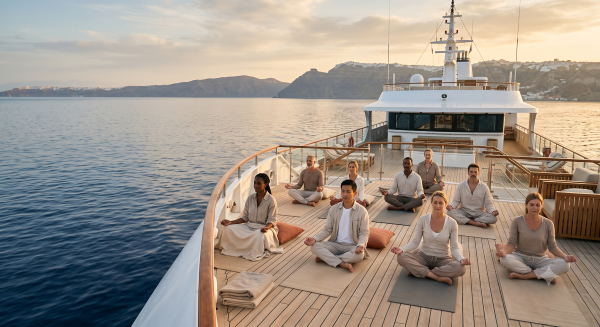
Daily guided meditation sits at the heart of a meditation cruise, and most ships designate serene locations with sweeping ocean vistas for these sessions. A morning practice could occur in a lounge with floor-to-ceiling windows, whereas evening sits might transition to a darkened spa space or a secluded corner of the sundeck.
Various styles are typically available so attendees of all levels can participate. One might focus on foundational mindfulness of breath, another on a body scan, and another on simple breathwork to relax anxiety and aid sleep. We add loving-kindness or short visualization on some cruises for guests who want to explore further.
The ocean itself sustains the work. The quiet hum of the engines, the gentle rocking of the ship, and the open horizon assist many guests in descending into a meditative state more quickly than at home. Light blankets, cushions, or chairs are typical so you can nestle in a position that feels secure for your body.
To maximize the program, it’s useful to check off all guided practices that appeal to you in a basic daily schedule. That could mean one long session in the morning and a short one at night or multiple shorter practices spliced around shore excursions. Knowing that schedule before the day begins helps you stick to it.
3. Mindful Movement

Mindful movement is a foundational element of these voyages. Yoga, tai chi, and soft stretching usually occur on deck, with the Adriatic or Mediterranean laid out around you. Classes could vary from extremely mild flows to chair-based that catered to guests with limited movement.
Certain itineraries integrate movement into shore time. Such a session can turn a simple walk through a silent path on a Greek island or along a rocky shore in southern France into a walking meditation. The concept is to experience each step and observe sounds, light, and smell instead of rushing from one site to another.
The sunrise and sunset sessions are always popular because of the light and air. Early morning yoga on a still deck, with just a handful of others and the lapping of water can establish the rhythm for the entire day.
To keep your own practice grounded, it’s helpful to write down all the movement choices available each day and circle the ones that align with your rhythms and intentions. During the week, this list evolves into a straightforward individualized wellness schedule that you can then translate back home.
4. Noble Silence
Most meditation cruises incorporate blocks of noble silence, where attendees commit to putting aside chatter, phones, and other sounds for a designated period. This could be as brief as the opening hour of each day or as expansive as an entire morning at sea.
Silent mornings or quiet zones—a portion of the deck or corner of the lounge—allow room for reflection and true relaxation. Freed from the obligation to socialize, you might find yourself more aware of the ocean, your breathing, or your state of mind.
Other programs supplement with silent shore walks, like a slow early-morning visit to the Acropolis before the crowds arrive or a quiet meander through Pompeii with the guide narrating only at the beginning and end. The combination of timeless ruins and stillness can make a powerful impact.
It’s useful to mark all planned silence on a calendar in advance and then shift your plans accordingly. That small act makes it easier to respect the silence and experience how it ripples through the remainder of your day.
5. Expert Facilitators
Behind the curtain, these cruises lean on senior meditation and wellness instructors who craft the daily schedule and lead sessions. Most have mindfulness, yoga therapy, or clinical stress and anxiety backgrounds and modify practices so they remain safe and feasible for travelers.
Small groups are often maintained for core workshops, so that there is space for questions and check-ins. This size makes guests feel seen and allows them to more easily share common struggles like restless minds, bad sleep, or work burnout in the serene setting with like-minded souls.
Other itineraries provide one-on-one time to inquire about a home practice, dealing with panic or worry, or sneaking in little meditations during a busy schedule back on land. These private talks may be particularly beneficial for those utilizing the cruise as a reset.
Most lines post facilitator profiles and sample session lists in advance of departure. Taking a few minutes to review that information and highlight the teachers and topics that fit your needs helps the trip feel more targeted and personal from day one.
The Onboard Wellness Ecosystem
The wellness ecosystem on a meditation cruise functions as a full support system, not a one-off class or treatment. Guests flow from spa treatment rooms to fitness studios, private lounges, and open decks. The entire ship begins to feel like a single expansive retreat space.
Restorative Spaces
Most ships in this niche carve out an obvious route for rest and recovery. Spa areas typically feature dry saunas, steam rooms, whirlpools, and tranquil massage suites, allowing you to schedule massages, facials, body wraps, reflexology and more for an additional fee. Others include sound healing with Tibetan bowls, guided breathwork and focused meditation sessions in dark, quiet rooms to reset between hectic days in port.
Fitness centers generally flank these spa areas. They feature yoga, Pilates, Tai Chi and even some spinning, with classes categorized by level so both novices and seasoned enthusiasts feel comfortable. Morning yoga on an open deck, followed by a brief mindfulness class, is common, and many ships supplement with seminars on stress management or recovery so guests know how to pace their bodies.
Quiet lounges, library nooks, and sun decks provide additional subdued alternatives. A tiny reading room overlooking the sea or a shadowy alcove on a wide terrace serve beautifully for solo meditation, journaling, or slow reading. Sun decks with soft loungers make it simple to relax after a massage or workout without returning to your cabin.
Seasonal rooftop pools and terrace bars, when used with intention, bolster down time. A quick swim, herbal tea, or a single perfect sunset cocktail can signal the transition from an active day to a slower eve. Most onboard wellness ecosystem coaches advise guests to map out their favorite spaces day one: spa, deck, lounge, pool, so they can transition to a restorative spot quickly whenever they feel overstimulated.
Nourishing Cuisine
Fare on a meditation cruise typically skews fairly straightforward, clean taste-wise. Menus frequently feature Mediterranean mainstays such as olive oil, ripe tomatoes, citrus, whole grains, fresh seafood and an abundance of vegetables. A wellness corner at the buffet may feature grilled fish, steamed greens, legumes and fruit desserts, so you don’t have to compromise taste for health.
Premium main dining rooms and specialty venues continue to introduce more creative dishes that still feel light. You could have grilled sea bass with lemon and herbs, vegetable tagines, or grain bowls with chickpeas and roasted roots to complement the richer options for those who desire them. Many wellness programs offer nutrition talks as well, where registered dietitians or chefs discuss portion size, healthy fats, and how to balance meals when you’re off your typical schedule.
Culinary activities amplify this attention. Wine tastings with local makers, hands-on cooking lessons, and culinary excursions ashore add meaning to what you bite into. A port call in Athens, for example, could include a market visit and a light Greek lunch of salad, grilled octopus, and yogurt with honey. A day near Florence might conclude with a humble Tuscan dinner centered on olive oil, beans, and seasonal veggies rather than rich sauces.
Digital Detox

The digital side of wellness receives earnest consideration on numerous meditation cruises. Programs frequently invite guests to unplug from phones and laptops during critical windows to support presence and awareness. A few ships designate specific lounges, small terraces, or even part of the spa as digital-free zones, where screens are off and voices are low to preserve a tranquil vibe.
Mindfulness and meditation classes underpin this reset, with teachers requesting guests leave devices in cabins and attend to such uncomplicated signals as the breath, wave sounds, or light on the water. In-person activities like small discussion circles, group walks on deck, or shared tea in a piano lounge foster genuine interaction with fellow guests and your environment rather than endless scrolling.
To keep device use in check, many travelers set a few simple rules:
- Review messages just one to two times a day at fixed times.
- Phones on airplane mode in classes, at meals and spa visits.
- Leave devices in the cabin after a set evening hour.
- Utilize a real alarm clock instead of a phone alarm.
- Disable push notifications for social media and non-urgent apps.
Who Benefits Most?
A meditation cruise naturally attracts individuals who are fatigued by long work days, incessant digital distraction, or perpetually ongoing family obligations. It’s ideal for travelers who desire stress relief, personal renewal, or an obvious escape from fast-moving schedules but don’t want a rigid retreat ashore. Numerous visitors come in overstressed, underslept, or with rising blood pressure and desire a peaceful environment to help them re-establish healthy routines.
Solo travelers tend to use these cruises as a safe space to step back and rethink life or work plans. Days alone on deck, combined with guided sessions, can really help you sort through big questions without the tug of home tasks. Couples can reunite when work, parenting, or living apart has pulled their attention elsewhere. Shared meditation and easy breathing work can reduce tension, smooth conflict, and enable more patient communication. Friends or work teams occasionally come as a party to mix wellness with cultural stops in separate ports, utilizing shore excursions and downtime on board to foster trust and shared memories.
Meditation cruises are perfect for novices and seasoned practitioners. Newcomers get step-by-step guidance, short 20 to 25 minute sessions, and direct support from trained staff, which is useful for people confronting a stressful event like a big talk, exam, or medical test. Even three short bouts prior to that competition will de-stress. More seasoned visitors may dive deeper with extended silent sits, body scan sessions, or loving-kindness practice designed for improved emotional regulation, empathy, and prosocial behaviors.
A simple checklist of personal wellness goals can help decide fit and set clear aims:
- Need less stress, improved mood, or assistance with mild depression or anxiety.
- Care for high blood pressure, emotional eating, or occupational stress.
- Live with chronic pain and want tools to help you cope and reduce distress.
- Work with alcohol cravings or past alcohol use disorder.
- Aiming to hone your concentration, memory, and cognitive velocity, particularly in your advancing years.
- Need more patience, emotional equanimity, and gentler responses to others.
The Transformative Power of Water
On a meditation cruise, water is no mere backdrop. It forms how the mind decelerates, how the body sleeps, and how the entire journey vibes from one day to the next.
Sailing the Mediterranean, Adriatic or Aegean you are never far from water — not just during a brief beach excursion. The ship is sailing through open sea and narrow straits, past islands and quiet bays, so you are virtually always surrounded by blue. This consistent exposure to water facilitates what numerous scientists refer to as the “blue mind effect,” a calm state during which focus relaxes, breathing becomes simpler, and tension decreases. Away from the city, with its noise and screens and sharp edges, the sea is expansive. The air by the water is thick with negative ions, which are associated in numerous studies with improved mood, sounder sleep, and a feeling that the brain can reboot in ways it seldom can in a congested city environment.
The lazy oscillation of the swell, the lap of water against the hull and miles and miles of horizon feed the nervous system with uncomplicated, consistent input. Staring out to sea or at a distant horizon can turn brain waves into gentle meditation. Most experience reduced anxiety, sluggish thoughts, and a gentle, even breath after mere moments gazing out at the ocean. Over hours and days, the immensity of the water can render daily concerns more manageable, physically smaller, more workable, as if they occupy less room inside the head.
Throughout history, water has represented sustenance and transformation. The ancient Greeks and Romans, for example, took advantage of seawater in thalassotherapy, bathing and reclining on the coast to relieve pain and fatigue. Even today, some still refer to water as a sort of “medicine,” for it can nourish the body’s comfort, the soul’s catharsis and the spirit’s awakening all simultaneously. There is something about the proximity of water that breeds hushed wonder and creative inspiration, with countless visitors describing feeling more grounded with both themselves and the universe after a journey on the ocean.
Simple moments on board go a long way to making this daily practice. Watching sunrise on deck with a light breeze, sitting in silence by the rail at midday, or standing frozen during sunset while the wake trails out behind the ship can all become brief, genuine mini-meditations. No fancy techniques. Concentrate on the horizon, the lulling motion of the swell, or the song of the prow as it tears across the ocean. Even quick, consistent breaks such as these cultivate a habit of tranquility that extends well beyond the cruise itself.
Choosing Your Mindful Itinerary

Choosing a meditation cruise starts with clear filters: where you want to go, how you like to spend your days, how much you plan to spend, and what kind of inner work you hope to do on board. The more you plan these pieces in advance, the simpler it is to stay present once you sail.
| Sample Mediterranean Route | Key Ports (examples) | Typical Length | General Budget Level* |
|---|---|---|---|
| Adriatic Calm | Venice, Dubrovnik, Kotor | 7–9 days | $$$ |
| Aegean Islands Retreat | Santorini, Mykonos, Patmos | 5–8 days | $$–$$$ |
| Western Med Cities & Sea | Barcelona, Marseille, Palma de Mallorca | 7–10 days | $$ |
| Heritage & Harbors | Valletta, Naples, Athens (Piraeus) | 8–12 days | $$$ |
Budget level is rough and depends on the season. Summer is peak. Travelers can extend this into their own comparison table and include columns for dates, cabin type, included workshops, shore excursions, and flight expenses.
Somewhere between the guided sessions and shore time and the slow hours alone is where the balance lies. Select trip plans that allow room for self-care rituals such as morning meditation, gentle exercise, or a silent tea on deck, rather than activity after activity from sun-up to sun-down.
Destination Energy
Each port is a mood unto itself. Barcelona tends to be luminous and extroverted, with bustling boulevards and cafés that don’t close until late. A tiny Greek island can be practically mute the minute you stray from the harbor. Valletta is heavy with history in a compact way. Santorini gravitates toward cliff drama and sunsets that are better suited to slow, reflective nights.
Connect the path to what really rejuvenates you. If art and history root you, a cruise with stops at Venice, Valletta, or Athens may work, as museums and ancient streets can coax contemplative silence just as a weekend hike or trip to the beach soothes the mind. If you lean towards nature, seek itineraries with small islands and lots of anchor time instead of mega city days.
UNESCO World Heritage Sites, such as the old city of Dubrovnik or Venice’s lagoon, can intensify contemplation as you stroll locales molded over generations. They can redirect attention from daily work to longer-term questions about your own route.
| Port / Area | Energy Style | Notable Highlights (examples) |
|---|---|---|
| Venice, Italy | Historic, reflective | Canals, quiet alleys, art-filled churches |
| Santorini, GR | Scenic, romantic calm | Cliff villages, sunset views, volcanic sand |
| Valletta, MT | Compact, layered past | Fortified town, museums, harbor walls |
| Barcelona, ES | Lively, urban | Architecture, food markets, long promenades |
Program Focus
Wellness itineraries on meditation cruises typically focus on a singular theme. Some emphasize mindfulness and breath work, including daily sits and body scans. Others construct around movement, like yoga, qigong, or walking meditations on deck. A smaller contingent gravitates toward food and sensory work, such as mindful eating sessions, cooking demos or tea ceremonies that connect taste and awareness.
Align the combination of workshops, shore excursions, and open hours with your preferred way to recharge. If you find that you feel better after spending time outdoors, a schedule that combines brief morning meditations with wild adventures, such as coastal walks, beach visits, and light hiking, generally makes more sense than one that keeps you cooped up in a studio all day. A short cruise or mini-vacation over the weekend can still be helpful if the daily itinerary is realistic and unjammed.
Some ships have guest teachers, from veteran meditation teachers to therapists or movement experts. These may provide targeted tracks, such as “stress and burnout recovery,” “grief and renewal,” or “mindful leadership” for working professionals. Examining each day’s schedule—session times, group size, optional evening talks—lets you visualize whether the program matches your rhythm instead of boxing you into someone’s abstract vision of a retreat.
Your Intention
A definite purpose forms the framework for the entire journey. It might be simple: rest after a heavy year, ease anxiety, reconnect with nature, or rethink work and life priorities. Jotting that goal out in a notebook prior to reserving anything can steer decisions regarding location, timing, and finances.
Silent journaling ahead of your cruise defines boundaries. You can specify how much social time you desire, shared tables versus solo dinners, and how much structure helps you. For some, a few short sits combined with long, open afternoons by the sea will suffice. Others will thrive with a steady rhythm of group practice.
Sharing a brief itinerary of your intention with a facilitator or host can help them direct you toward sessions, shore excursions, or even mealtimes that suit your needs. Consider these questions when selecting your mindful itinerary. They may lead you to a smaller group hike rather than a bus tour or a beach meditation instead of another indoor lecture.
Once on board, it’s easy to fall into the fantasy schedule of a lost soul. Refreshing your notes every couple of days keeps the trip in touch with real life. This links back to everyday routines at home: planning how you will keep a small piece of the cruise—such as a 10-minute morning sit or a weekly walk in nature—makes the experience more than a one-time pause.
How to Prepare
How you prepare for a meditation cruise determines how zen the trip will feel aboard and ashore. This includes how early to book, what to pack, what to read in advance, and where to get extra help with the plan.
Booking early counts since meditation cruises tend to have a limited number of cabins near silent lounges, retreat-style suites, and intimate small group excursions that go quickly. Booking early gives you a better chance at a cabin that’s not near elevators and night clubs, which helps with both sleeping and early-morning practice. It assists in securing preferred itineraries, like a slower Mediterranean itinerary with additional sea days for workshops or an itinerary with more time in ports where there are spiritual sites or nature walks. Optional excursions, such as guided temple visits, mini yoga classes on a beach or mindful walking tours in historic neighborhoods, can book up months in advance, so advance reservations secure those options.
Your packing should be both comfort and practice-based. For daily meditation and yoga, easy stretchy pants, breathable tops, and a light sweater or shawl are good in air-conditioned rooms. On a Mediterranean cruise in summer, breathable, light-colored clothes, a wide-brim hat, and sunglasses go a long way toward taming strong sun and heat. Certain European churches have strict “no shorts or bare shoulders” policies, so a long skirt or light pants and a scarf over the shoulders are useful to keep in a day bag. Rolling clothes can reduce wrinkling and save room. Most guests bring along a mini travel mat, eye mask, reusable water bottle, and thin blanket or scarf for resting periods. OTC medicine like motion sickness pills, headache relief, Tums, simple cold medicine, and cough drops de-stress if little things pop up at sea. A Kindle or other e-reader keeps reading material accessible without much weight. In port, expect longer walks from ship to town than on many Caribbean itineraries and wear supportive shoes. Other travelers keep their costs down by bringing dry cocktail mixes and purchasing shots, which can be up to 40% less expensive than full cocktails while maintaining a low to moderate alcohol intake on a wellness trip.
Reading your pre‑departure materials provides a good sense of cadence prior to boarding. A daily schedule preview displays when silent periods, group sits, movement classes, and talks occur, making it easier to plan meals and shore time around them. Facilitator bios assist in matching expectations with teaching styles, backgrounds, and experience, which can steer you towards which sessions to prioritize if multiple run simultaneously. Dining details matter more than people expect on a wellness trip. Knowing buffet times, vegetarian or plant‑based options, and any mindful eating offerings makes it easier to keep a steady routine and avoid last‑minute choices that clash with personal goals.
For travelers who want less guesswork, reaching out to Travel Envy can remove the hassle. A planning team can match meditation styles, comfort level, and budget with specific sailings and cabin types, then assist with itinerary tweaks, such as adding hotel nights before or after the cruise or booking excursions in advance so popular tours don’t sell out. They can combine flights, transfers, and cruise check-in into a single plan, so logistics live in one spot instead of multiple bookings and messages. This sort of assistance generally deflates last-minute tension and provides more energy for real work once the ship sails away.
Conclusion
A meditation cruise mixes sea, stillness, and small daily caretaking. The ship becomes a tranquil home base. The water provides consistent noise and expansive vistas. The days are clear and slow.
A lot of people benefit from a journey like this. Harried moms and dads, anxious employees, lone wanderers, and aging visitors all have room to breathe. Short sample meditations, soft yoga, and quiet decks assist new and experienced meditators alike.
A good fit for you depends on your needs. Trip length, group size, budget and guide caliber all factor. Small steps before you sail assist, like light stretch, short breath work, or less screen time.
Ready to give it a try? Begin with a single mindful journey and observe the reactions of your psyche and physiology.
Frequently Asked Questions
What is a meditation cruise?
A meditation cruise is all about guided meditation, mindfulness, and relaxation during your sea journey. Think of it as a meditation cruise that blends ocean travel with daily yoga, breathwork, and silence. The objective is to aid you in resetting mentally, emotionally, and physically in a peaceful, organized environment.
Who should consider going on a meditation cruise?
A meditation cruise appeals to novices and seasoned meditators alike. It is perfect for frazzled, overworked, or rut-prone people. It serves those craving digital detox, inner clarity, soft movement, and a secure, expertly guided path to dive deeper into their mindfulness practice.
How is a meditation cruise different from a regular cruise?
Wellness instead of entertainment, that’s what a meditation cruise is all about! Think quieter venues, daily classes, healthier food choices and less late-night partying. The schedule encourages rest, reflection, and inner work as opposed to frenetic activity. The whole space is optimized for stillness and mindfulness.
What kind of activities are included on a meditation cruise?
Induction activities might consist of guided meditation, yoga, breathwork, sound baths, journaling, and mindfulness workshops. Many other cruises combine spa treatments, nature-focused excursions, and digital detox sessions. Each is designed to alleviate tension, enhance concentration, and promote emotional equilibrium in the midst of the ocean.
Do I need meditation experience to join a meditation cruise?
Not experience necessary. Most programs are newbie friendly and begin with simple techniques. Typically, instructors provide detailed directions, posture advice, and strategies to cope with distractions. Experienced meditators can take advantage of advanced sessions and prolonged silence or self-practice time.
How do I choose the right meditation cruise itinerary?
Ask about the daily schedule, teacher credentials, group size and retreat theme. Think about trip length, destinations, budget and how much structure you want. Find transparent class descriptions, experience levels and pricing. Check out what previous visitors said about it.
How should I prepare for a meditation cruise?
Bring comfortable clothes, a refillable water bottle, and any personal items like a journal. Cut back on caffeine and screen time a day or two before you leave. For example, establish a clear intention for the trip, such as stress relief or inner clarity, that will help direct your cruise decisions.
Need help refining your plans? Discover Travel Envy’s professional travel planning services designed for seamless multi-destination journeys.
Luxury Europe Travel Experience
European River and Ocean Cruise Planning
Customized All-Inclusive Vacation Planning
For deeper research, consult trusted travel authorities and cultural organizations across Europe to refine your travel plans with confidence.
Overview of Schengen Area Travel Regulations