
- Key Takeaways
- Match Your Travel Style
- Navigating Asia’s Rhythms
- Beyond the Tourist Trail
- Your First Asia Trip
- Crafting Your Itinerary
- A Smarter Way to Plan
- Conclusion
- Frequently Asked Questions
- How do I choose destinations in Asia that match my travel style?
- What is the best time to visit Asia considering weather and festivals?
- How can I travel beyond the tourist trail safely?
- What should first-time travelers to Asia pack?
- How do I craft a balanced Asia itinerary?
- What’s the smartest way to plan transport within Asia?
- How can I manage costs without sacrificing experiences?
Key Takeaways
- Match your travel style to Asia’s best regions by listing your top reasons to travel and shortlisting destinations geared towards adventure, culture, cuisine, luxury, or wellness. Employ an easy structure that equalizes passions, security principles, and real-world facilities.
- Plan your travel with the seasons to miss monsoons and heat waves and catch big festivals. Balance quick cities with slow rural or island stays and include rest days to avoid burnout.
- Establish your budget, knowing average daily costs for budget, mid-range, and luxury travel. Cut costs along the way with public transport, street food, local guesthouses, and off-peak travel windows.
- Go beyond the tourist hotspots and seek out secondary cities and isolated regions for authentic experiences. Master some local lingo, respect traditions, and participate in community-oriented experiences to enrich cultural interaction.
- Travel smarter with apps for navigation, translation, bookings, and offline usage. Stay safe and healthy with vaccinations, travel insurance, trusted food and water, and knowledge of local scams.
- Construct a loose plan of action based on must-sees, clustered by proximity and themes like history, nature, or cuisine. For multi-country trips, check visas, plan border crossings, and use regional passes or flights to streamline logistics.
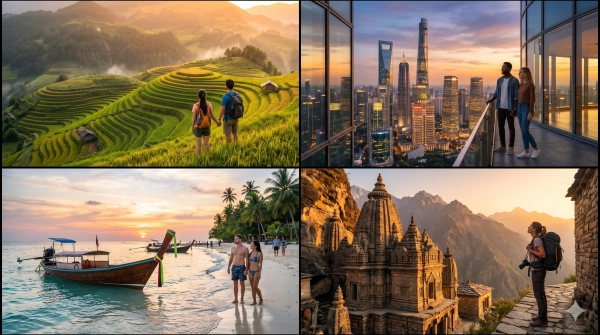
Think of an Asia travel guide as your direct path to organizing journeys through the varied landscapes of East Asia, South Asia, and Southeast Asia. It includes visa essentials, high and shoulder seasons, main routes, and local customs in urban and rural areas. Plan wisely and keep track of monsoon windows, festivals, and heat as it’s often over 30°C in summer. As for transport, consider high-speed rail in Japan and China, no-frills airlines for cross-border hops, and long-haul buses for cheap jaunts. For expenses, monitor daily expenditures by country, as rates are highly variable. To be safe, follow local regulations, get registered taxis, and keep copies of IDs. To schedule days, align food, nature, and culture stops to the time available. The following sections plot paths and instruments to employ.
Match Your Travel Style
1. The Adventurer
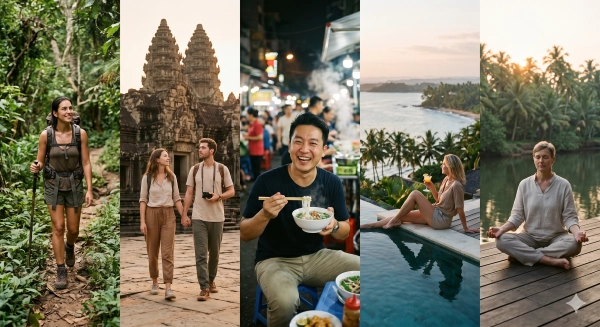
For hiking and alpine treks, Nepal Himalaya (Everest and Annapurna regions) and India’s Ladakh rank high with marked trails, guides and rescue services. Match your travel style. In Southeast Asia, Laos is perfect for jungle trekking and river trips. Southern Laos serves up a gentle Mekong experience, whereas Nong Khiaw has waterfall treks and low-key adventure with far fewer crowds.
Diving and marine life peak in Indonesia (Raja Ampat, Komodo), the Philippines (Tubbataha, Apo Reef), and Malaysia (Sipadan). Top surf spots are in Bali, Siargao, and Sri Lanka’s south coast. Rock climbing is in Railay, Thailand, and Yangshuo, China. Seek out licensed operators, transparent safety briefings, and equipment checks.
For wildlife, Borneo (Sabah and Sarawak) has orangutan and proboscis monkey tours and caving in Mulu. Japan and South Korea have neat ski resorts with avalanche control and rentals.
2. The Culture Vulture
Start with heritage hubs: Kyoto’s temples, Angkor in Cambodia, Bagan in Myanmar, Hoi An and Hue in Vietnam, and Uzbekistan’s Silk Road cities. Hanoi, Vietnam’s cultural and historical center, is perfect for old-school capital lovers.
Join local festivals with interpretation from guides, take craft workshops in ceramics, textiles or lacquer, and book historical walking tours. Culture travelers can participate in ceremonies, apprentice with traditional craftspeople, or enjoy homestays. Homestays in rural Laos provide a nice exchange without the heavy tourist traffic.
3. The Foodie
Base in culinary capitals: Tokyo for sushi and kaiseki, Bangkok for street food and markets, Penang for hawker classics, Taipei for night markets, and Seoul for barbecue and banchan.
Hokkaido seafood, Thailand’s Isaan salads, Vietnamese phở and bún chả, Malaysian nasi lemak and char kway teow, and Korean kimchi jjigae. Reserve small-group food tours, market visits with cooking classes, and timed tasting nights. Mix old and new: hawker stalls by day, chef-led tasting menus at night.
4. The Luxury Seeker
Think Maldives and Bali for five-star villas, private pools, Japan’s ryokan with onsen suites, and Dubai-to-Asia yacht links to go for charters in Phuket or Langkawi. Book the Eastern and Oriental Express for an old-school rail route. Go for high-end shopping and fine dining. Hit up Singapore, Tokyo, Hong Kong, and Seoul. Leverage concierge services for private Asia travel guide, fast-track lanes, and curated art or tea ceremonies.
5. The Wellness Pilgrim
Opt for India’s Kerala and Rishikesh for yoga and Ayurveda, Bali’s Ubud for holistic retreats, Thailand’s Koh Samui and Hua Hin for detox and fitness, and Japan’s Hakone or Beppu for hot springs. Build a calm plan: morning meditation, afternoon nature walks, and spa blocks. Laos is perfect for unhurried, peaceful days. Thailand brings in soft beach moments, with Cambodian islands or Koh Chang holding the perfect combination for peaceful swimming and sunset lounging.
Navigating Asia’s Rhythms
Seasonal Flow
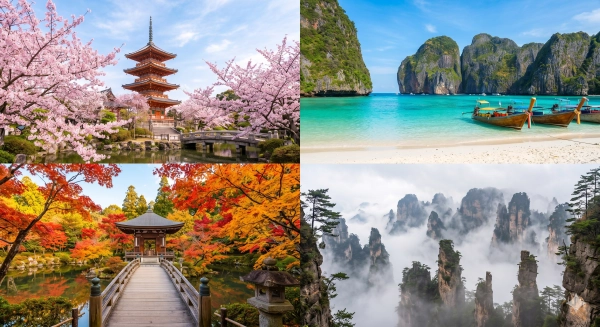
Cool, dry months fuel perfect travel throughout much of the area. East Asia (Japan, Korea, eastern China) hits its sweet spot in April to May and October to November for mild temps and clear skies. Mainland Southeast Asia (Thailand, Vietnam, Cambodia, Laos, Myanmar) is optimal from November to February, when monsoons are dissipating and heat is tempered. South Asia varies: India’s north is pleasant from October to March, while the Himalayan fringe suits April to May and September to November. In Indonesia and Malaysia’s Borneo, dry spells occur from May to September.
Peak seasons bring crowds and rates, particularly at cherry blossom time in Japan, during Lunar New Year regionally, and throughout the December holidays. Shoulder months, which include late February, June, and late September, typically have quieter sites and better offers.
Climate swings broadly. Anticipate tropical heat and showers in Bangkok, dry sun in Bali mid-year, and mountain chill in Nepal or Japan’s Alps. Throw in some layers and quick-dry gear and mind local typhoon and monsoon windows.
| Country/Region | Optimal Window (weather + activities) |
|---|---|
| Japan | Apr–May, Oct–Nov (mild, blossoms/foliage) |
| Thailand (mainland) | Nov–Feb (cooler, dry) |
| Vietnam | Feb–Apr, Sep–Nov (north-south balance) |
| Cambodia | Nov–Feb (dry, Angkor clear skies) |
| Indonesia (Bali, Java) | May–Sep (dry, surf/trek) |
| Nepal | Apr–May, Oct–Nov (clear trekking) |
Pace & Duration
Great distances and diverse geography beset their travels. Buses and trains are common in Southeast Asia and a backpacker-style trip fits like a glove.
Two weeks will not span an entire region. It can provide a strong flavor of a single nation or a close bunch. Most travelers choose two countries they’re most interested in. Vietnam by itself can require two to five weeks. Then, throw in a minimum free week for Angkor Wat in Cambodia.
Insert rest days. Allow space for slow ferries, mountain weather, or an open-air market you’d like to see again.
Sample frames:
- Short (10–14 days): Bangkok and Northern Thailand, Tokyo and Kyoto, Hanoi, Hue, and Hoi An.
- Medium (3 to 5 weeks): Vietnam end-to-end; Japan with an alpine interlude.
- Extended (3–4 months): Mainland Southeast Asia at ease, crossing borders by rail and bus.
Budget Realities
Average daily costs (per person, EUR):
- Budget: 25–45 in Southeast Asia; 50–80 in Japan/Korea
- Mid-range: 60–120 in Southeast Asia; 120–200 in Japan/Korea
- Luxury: 150–350+ in Southeast Asia; 250–500+ in Japan/Korea
Affordable: Vietnam, Laos, Cambodia, parts of Indonesia and India. Higher spend: Japan, Singapore, Hong Kong.
- Use metro or intercity trains.
- Eat street food and local set meals.
- Book guesthouses or business hotels.
- Fly with regional low-cost carriers.
- Buy SIM cards; avoid roaming.
- Carry travel insurance that covers long trips.
- Check passport validity (6+ months left).
| Style | Lodging | Food | Transport | Daily Total (EUR) |
|---|---|---|---|---|
| Budget (SEA) | 10–20 | 6–12 | 5–10 | 25–45 |
| Mid (SEA) | 30–60 | 12–25 | 8–20 | 60–120 |
| Budget (Japan) | 25–45 | 12–20 | 10–20 | 50–85 |
Beyond the Tourist Trail
Asia rewards anyone who ventures beyond big-city loops and marquee sights. Sub-secondary cities, back valleys, and still islands provide unhurried days, reasonable prices, and deeper connections with the locale. In Southeast Asia, a frugal five-day itinerary can remain under €600, all included, while still encompassing accommodations, meals, and transportation. Off-the-track travelers discover queue-free, centuries-old temples, green valley road trips, and local-recipe keepers in family-run cafés.
Local Immersion
Register for hardcore, brief courses attached to place — no-frills textile weaving in Luang Namtha (northern Laos) prior to a hill tribe trek, or a farm-to-bowl noodle class in the mountainous heart of Vietnam. If vetted and community-led, volunteering adds context. Opt for roles that build skills on site, not quick photo ops.
Simple words switch rooms and rides. Know your hellos, numbers, and thank-yous. Pull them out with street vendors, drivers, or homestay hosts. The tone is every bit as important as the words.
Hit neighborhood markets at dawn, small festivals after dusk, and family eateries on side streets. Avoid chains when you can. Tell owners what eats they cook at home to squeak past the menu.
Be mindful of your attire at temples. Take off your shoes when requested and observe before photographing. If you’re invited to a ceremony, graciously accept and watch first.
Digital Tools
Use a trusted map app for bus routes and walks, a translation app with voice mode, and a simple trip planner to keep tabs on dates. Pin fuel stops if riding the Mae Hong Son loop in rural Thailand and sync notes between devices.
Social platforms aid in discovering pop-up markets, live music, or food stalls that are sold out by noon. Save posts to city lists and cross-check with local forums.
Get offline maps and guides before border zones or mountains. Cues disappear quickly on summit paths and boat rides.
Keep bookings, tickets, and IDs in one secure folder. Back up to the cloud and have one offline copy.
Sustainable Choices
Choose accommodations with transparent water, waste, and energy policies. Reserve an Asia travel guide that limits group size and employ local staff. Pack a refill bottle, refuse single-use bags, and participate in beach or trail cleanups if presented the opportunity. Prefer trains, buses, or cycle and walk where safe. In more than six to eight weeks, overland routes connect Hanoi and central and north Vietnam to Luang Namtha and further afield at an unhurried pace. Go for community-based treks, steer clear of animal-petting, and when aiming for peaks such as the 3,600-metre Lake Alakul, employ leave-no-trace essentials.
Your First Asia Trip
Try spring (March–May) or autumn (September–November), when the weather is mild in most of the region. For a first trip, to avoid burnout, pick two countries. Two weeks allow for a focused sampler, or four weeks let you see all of mainland SE Asia without rushing. Thailand is a great initial step with defined paths and ample lodging options. Vietnam’s Hanoi and Halong Bay, or Laos’s Luang Prabang with its UNESCO-listed heart and Mekong views, make a good first circuit. Buy travel insurance that includes medical care, theft, and trip changes.
Common Hurdles
Verify visa regulations based on your passport and point of entry. Some require e-visa pre-approval and others request passport pictures and onward travel evidence. Ensure the passport has at least six months of validity and two blank pages.
Food and water are different from place to place. Select crowded stalls with lots of turnover, consume hot cooked food, and peel your own fruit. Water is important; always drink bottled or filtered. Numerous hotels now provide refill stations. Pack basic meds for stomach upset, dehydration salts, and a mini first-aid kit.
Transportation can be variegated. In big cities, metros and ride-hail apps come to the rescue. For intercity routes, trains and long-distance buses do the trick, but book early on peak days. In islands or rural areas, ferries and minivans run on looser time, so pad your schedule.
Jet lag strikes harder with 6 to 12 hour shifts. Adjust bedtime 1 to 2 hours early prior to flying, hydrate, and get morning light upon arrival. Take short cat naps afterwards, then establish a regular local bedtime.
Essential Etiquette
- Greeting and body language: Light bows or nods are common. Handshakes are softer than in the West. Avoid forceful back slaps. No touching heads, as it offends.
- Dress and modesty: Shoulders and knees should be covered in temples or rural areas. In cities and beaches, casual is okay, but bring a light cover-up.
- Temples and sacred sites: Remove shoes and sometimes hats too. Don’t point feet toward shrines. Don’t trample donations.
- Hands and giving: Offer and receive money, gifts, or business cards with both hands. Don’t point with one finger; use a flat hand.
- Tipping and gifts: Tipping is not universal. In Thailand and Vietnam, small tips are appreciated for good service. In Japan, tipping will be declined. Gifts should be small and neatly wrapped. Steer clear of razors.
- Common pitfalls: Loud voices, public anger, and public displays of affection can cause offense.
Health & Safety
Visit a travel clinic for advice on necessary shots and malaria tips. Pack prescriptions in original labels along with antihistamines, pain relief, and rehydration salts.
Stay alert to common scams: over-quoted fares, closed-attraction ruses, and fake tour desks. Take licensed taxis or ride-hail, negotiate fares, and keep valuables zipped and cross-body.
Opt for locations with consistent traffic and obvious cleanliness. Drink sealed bottled water or use a filter bottle. Steer clear of ice unless you are in a place that you trust.
Save key numbers: local emergency services, your embassy, and insurer hotline. Locate local hospitals and clinics in each city and list cash and credit policies.
Crafting Your Itinerary
Thematic Routes
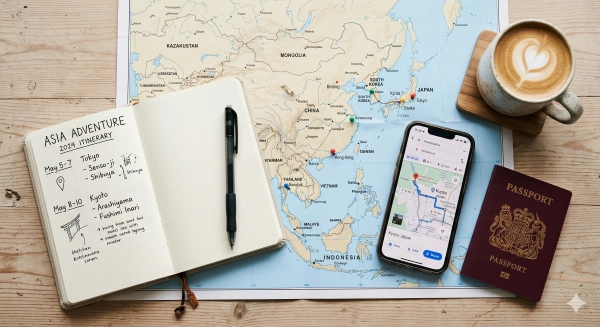
Construct paths by interest to keep decisions streamlined and transit lines tidy. Group nearby cities to cut long transfers: pair Kyoto and Nara for culture, Hanoi, Ninh Binh, and Ha Long for karst scenery, and Penang and Langkawi for food and shores. In the tropics, weather varies by coast and month, so match themes to seasons, not borders.
Sample themes assist. History: Angkor in Siem Reap, Hue’s imperial sites, Gyeongju’s tombs. Nature: Borneo rainforests, Hokkaido lakes, Nepal mid-hill hikes. Food: Osaka street eats, Taipei night markets, Penang hawker stalls. Island hopping: Thailand’s Andaman in dry months, Indonesia’s Nusa islands with shoulder-season swells.
| Theme | Route | Suggested Duration |
|---|---|---|
| Silk Road Highlights | Xi’an – Dunhuang – Kashgar – Almaty | 12–16 days |
| Island Hopping | Phuket – Koh Lanta – Koh Lipe – Langkawi | 9–12 days |
| Imperial Asia | Kyoto – Seoul – Gyeongju – Beijing | 10–14 days |
| Mountain & Tea | Kandy – Nuwara Eliya – Ella – Haputale | 6–8 days |
Reserve one unscheduled block every 4 to 5 days for local tips. Asia’s weather is nice somewhere every month; just move regions to follow it.
Multi-Country Trips
Shoot for clean hops between HUBS to save HOURS! Use regional budget flights for long jumps and use trains or buses where borders are close, such as Vietnam to Cambodia or Singapore to Malaysia.
Visa’s determine schedule. Verify e-visa lead times, entry regulations and onward ticket requirements. Maintain electronic and hard copies. Some nations will want evidence of funds and accommodation, so prebook nights.
Balance time by depth, not country count. Two months is a good minimum for four mainland Southeast Asian nations. Two-week fly-everywhere sprints often seem skimpy. The region’s warm climate encourages longer, slower loops.
Checklist for daily plans:
- Morning: one key sight, prebook if limited slots.
- Midday: local lunch, short rest, review weather.
- Afternoon: second nearby stop, short transfer only.
- Evening: market or show. Log costs in one currency for clarity.
- Buffer: 2 hours for delays; move anything nonessential.
A Smarter Way to Plan
Efficient planning shapes a better Asia trip with clear goals, the right pace, tight logistics, and flexible buffers.
Leverage Travel Envy’s expertise to match you with perfect destinations.
Start with what matters most: climate windows, visa rules, and travel pace. Travel Envy balances monsoon seasons, festival dates, and peak crowds against your budget and time. If you have two weeks, it’ll propose a single country or a close-knit two-country combination, like Japan with South Korea or Thailand with Cambodia. If you need overland routes, it charts border hours and train connections. For mainland Southeast Asia, it warns that a chill overland loop across Thailand, Laos, Cambodia, and Vietnam requires a minimum of two months in order to not feel rushed. If mountains beckon, it shifts time to northern Vietnam for Sapa or Ha Giang hikes. It helps you choose depth instead of breadth, so you experience more by doing less.
Let Travel Envy handle all logistics, from flights to accommodations.
It builds door-to-door plans: multi-city flights, regional low-cost carriers, rail legs, and ferries. Schedules coordinate with sunrise hikes, night markets, and jet lag. Rooms are located by transit nodes or silent lanes, not remote. It provides a day or two of buffer to soak up weather changes or strikes. For shorter jaunts, it coordinates easy bounces from Bangkok to Siem Reap to Phnom Penh so you’re on the streets and not waiting in line. It maintains visa entries, baggage rules, and seat holds in a single glance you can adjust.
Personalize your Asia journey with curated experiences and insider access.
You select the level of depth. Travel Envy perfects it. Food trails in Penang or Osaka, temple trails in Luang Prabang, artisan villages around Chiang Mai, tea plantations in Sri Lanka, or coral reefs in the Philippines. It books small-group guides, early-access temple slots, night food walks and rail passes. If you like slower days, it spaces out big sights and incorporates local classes, farm stays, or hot springs. For those who prefer day-to-day calls, it constructs a lean backbone and keeps same-day rooms and buses within reach.
Enjoy peace of mind with end-to-end support and seamless travel planning.
You receive a single plan, a single point of contact, and live assistance if plans change. It cuts hard-charging schedules that dash across five different cities in a single week. It keeps the rhythm humane, guides you to one or two nations for brief respites, and grounds time where it matters.
Conclusion
Asia rewards slow steps and sharp planning. Big cities hum day and night. Quiet towns send peace and warm smiles. Street food costs just a few bucks and packs a punch. Trains connect main hubs quickly. Discount airlines fill gaps. Weather is regional, so check your dates and pack light.
For planning simplicity, lock dates first. Book stays near transit. Choose one theme per stop, such as street food in Bangkok or hike days in Sapa. Save white space for rest or a last minute tip. Pick up a couple local words. Card or cash, keep them both.
Your next moves, chart a path today. Choose three destinations and two activities for each. Establish a spend limit. Reserve the initial night. Begin there.
Frequently Asked Questions
How do I choose destinations in Asia that match my travel style?
Start with your priorities: culture, nature, food, or adventure. Shortlist three to five countries that fit. Verify seasonality, regulations for visas, and safety. Balance big cities with peaceful stops. Use official tourism sites and recent traveler reports to double-check picks.
What is the best time to visit Asia considering weather and festivals?
Shoot for the dry season in each. Southeast Asia: November to March. East Asia: March to May and September to November. South Asia: October to March. See local festivals for crowds and costs. Check current weather patterns before you book!
How can I travel beyond the tourist trail safely?
Investigate second-tier cities and the countryside with trustworthy resources. Hire licensed Asia travel guides. Understand some local etiquette basics. Make sure to leave your itinerary with someone. Take registered transport. Maintain duplicates of important papers. Go for day trips first, then for overnight trips.
What should first-time travelers to Asia pack?
Bring light, airy clothes, conservative layers, and walking shoes. Pack a universal adapter, power bank, sun protection, and some basic medicines. Bring digital copies. Respect the local dress codes for temples and rural areas.
How do I craft a balanced Asia itinerary?
Limit long-haul moves. Plan for 3 to 4 nights at each stop. Cluster nearby cities to reduce transit time. Add rest days. Book your anchor items, such as flights, key trains, and permits, early. Allow buffer time for delays and unexpected discoveries.
What’s the smartest way to plan transport within Asia?
Mix in regional flights, high-speed trains, and buses. Rely on official apps and official rail sites for schedules. Fly for long haul, train for middle, and use metro for cities. Look at overall travel time, not just ticket price.
How can I manage costs without sacrificing experiences?
Travel in shoulder seasons. Combine cheap accommodations with the occasional splurge. Dine where the locals eat. Pre-book the big-ticket items. Hop on public transport. Record expenses daily. Select the experiences most appropriate for your objectives.
Looking for expert travel planning support? Explore curated itineraries, insider tips, and personalized travel planning with Travel Envy to discover the best destinations, routes, and experiences that match your travel style.
Adventure Travel for the Family
Need official travel information?
Check trusted resources like government tourism boards and educational platforms for the latest updates on destinations, entry requirements, safety, and travel planning across the globe.