
- Key Takeaways
- Rethink Your France Itinerary
- Crafting Your Perfect France Itinerary
- The Paris Experience
- The Provence Dream
- The Riviera Lifestyle
- Beyond the Itinerary
- Conclusion
- Frequently Asked Questions
- How many days do I need for a balanced France itinerary?
- What is the best time of year to visit Paris, Provence, and the Riviera?
- How should I travel between Paris, Provence, and the Riviera?
- Is Paris worth more than two days in an itinerary?
- How can I avoid crowds at top attractions?
- What should I budget per day in France?
- Do I need to speak French to travel comfortably?
Key Takeaways
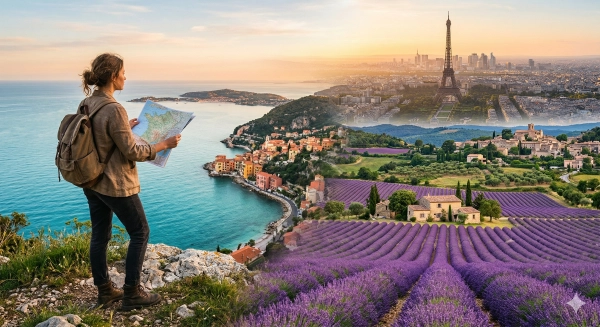
- Map out a slow travel itinerary that clusters nearby regions together for more seamless logistics and depth. Don’t try to pack too many stops. Concentrate on Paris, Provence, and the Riviera.
- Construct your itinerary around can’t-miss cities and sprinkle in some variety with countryside châteaux, coastal moments, and market towns. Tune in to your interests, from wine in Bordeaux to Alps hiking or Lyon food tours.
- Tailor trip length and pace to your goals, staying 2-3 nights per base and alternating bustling days with downtime. Buffer days and keep long travel days to a minimum because you spend time too tired to enjoy the beautiful scenery along the way!
- Travel in spring or early fall for comfortable weather and fewer crowds. Adapt for seasonal highlights. Double check opening hours and local holidays for chateau tours, museums, and festivals.
- TGV trains are for between city travel and renting a car is for rural areas and drives such as the D559. Select central bases — Paris, Avignon, Nice — and take day trips to the Loire châteaux or Côte d’Azur beaches.
- Mix world-famous sights with local life, from the Eiffel Tower and Versailles to farmer’s markets, lavender fields, Roman ruins and hilltowns along the Riviera. Save some room for surprises and the next region, Dordogne or Alsace!
France travel itinerary provides a well-defined path to visiting the highlights of the country in a specific number of days. On a first trip, 7 to 10 days is often Paris for art and food, the Loire Valley for châteaux, and Provence for light, lavender, and hill towns. For coasts and wine, combine the French Riviera with Bordeaux, where rail connections between main hubs are under 4 hours. For alpine views, go via Annecy or Chamonix, best from late spring to early fall. To save time, travel on fast TGV trains, pre-book museum entries, and cluster sights by district. To suit pace and budget, the guide below maps out sample days, travel times, and local tips by region.
Rethink Your France Itinerary
Strive for slow travel with intelligent clusters, not a mad dash across the map. France is huge and diverse, so select two to three areas and get deep. Bundle Paris, Provence, and the Riviera if you want a combination of city art, hill towns, and coast. Or connect Paris with Normandy and the Loire Valley for castles, cider, and World War II history. Keeping them grouped keeps your transfers short and your days less rushed, which means more time in a café or at a market and less time on trains.
Don’t stuff your France itinerary with too many stops. Quality triumphs. In Paris, schedule no less than three complete days of the old standards and quiet saunters through Luxembourg Gardens and Place des Vosges. In Bordeaux, most recommend at least three days to encompass the riverfront, wine bars, and a day trip to vineyards. In Provence, it’s totally doable to visit Gordes in one day, but you’ll want a two or three-night stay to sample other nearby villages and wandering trails at your leisure. The same is true on the Riviera: towns like Menton and Cassis look close on a map, but each has its own beaches, hikes, and views that reward an unhurried pace.
Balance icons with downtime. Visit the Louvre, then waste the following morning in a neighborhood bakery. There’s still time to rethink your France itinerary. Hit up Nice’s beach clubs by day and take a lazy evening walk on the Promenade des Anglais. In Provence, schedule your Sunday in and around L’Isle-sur-la-Sorgue for its markets and antiques. Then break for a leisurely lunch. In the Ardèche, intersperse scenic drives with brief village strolls and overlooks. These pauses help you notice small things, such as seasonal menus, local cheeses, and daily rhythms that make the trip feel grounded.
Schedule things on your France itinerary that are logical from a map perspective. Begin in Paris, head west to Normandy for its scenic coastal towns and D-Day sites, migrate south to the Loire Valley for stunning châteaux, and wrap up your tour in Bordeaux if time permits. Or arrive in Paris, take the TGV to Avignon for Provence, then on to Nice for the Riviera. This reduces backtracking and transforms travel days into sightseeing days. Reserve important restaurants and popular tours in advance, but leave buffers for last-minute adjustments if the weather changes or a market calls to you.
Crafting Your Perfect France Itinerary
Designing Your Ideal France Itinerary Center your route on Paris, Avignon, and Nice for easy connections. Then sprinkle in countryside châteaux and seaside escapes. Mix in city days with wine country, Alps hikes, or Lyon food tours so the plan matches your style.
| Route idea | Travel time (approx.) | Highlights |
|---|---|---|
| Paris → Avignon (TGV) | 2 h 40 min | Palais des Papes, Rhône views, Provence markets |
| Paris → Marseille (TGV) | 3 h | Old Port, gateway to Calanques, quick link to Nice |
| Avignon → Nice (train) | 3 h 30 min | Côte d’Azur towns, beach time, museums |
| Nice → Paris (TGV) | 5 h 40 min | Coastal to capital, easy flight links |
| Paris → Loire Valley (train to Tours) | 1 h 10 min | Château visits, vineyards, river paths |
1. Duration
Choose a week in Paris and one region. Ten days for Paris, Loire châteaux, and Provence. Two weeks to include the Riviera or Bordeaux. Paris and the Loire Valley are just packed with sights, so offer them added days and pre-book the Louvre to secure a time slot.
Provence and the Riviera road trips are most effective with relaxed days. Make room for lavender roads outside Valensole, optimal from late June to mid-July, and picturesque D559 turnoffs.
Maintain at least one buffer day. Take it for markets, a Seine cruise or a quick detour to Moustiers-Sainte-Marie, which is delightful any time of year.
2. Pacing
Two to three nights per base city should do for depth. Mix a hectic museum day with a lazy morning in a Provence café or Nice promenade.
Limit long travel to half-days. Include market stops in summer when things are at their best. Stay active on day 1 to beat jet lag.
3. Season
Pick spring or early fall for mild weather and lighter crowds. Catch Provence during the lavender bloom or select summer on the Riviera for festivals and warm seas.
Check event calendars: Paris Marathon in spring, Bordeaux harvest in September to October. Verify château and museum hours on holidays.
4. Transport
Leg. Compare trains, car hire and small-group minivan tours. Compare trains, car hire and small-group minivan tours. Take TGV for quick city hops. Paris to Marseille takes around 3 hours. Explore by car to access secret Provence villages and D559 overlooks. Get in through Paris Charles de Gaulle or Bercy Seine for bus connections.
5. Base
Central Paris, Avignon station area and Nice Old Town are very walkable so book there. Smaller bases like La Rochelle or Saint-Paul-de-Vence provide a moderate tempo. Go for a day trip to Loire châteaux or Côte d’Azur beaches. Select boutique stays or a countryside château and sample regional menus and uncomplicated plates such as Steak Frites. For wine, Bordeaux deserves three days.
The Paris Experience
Start with main sights, then wander into neighborhoods. Balance major museums with small stops and plan routes by neighborhood to save time. Crowds run all year long, and summer peaks. The quietest months are November and January or February, with gray rain in the former and colder days in mid-winter.
Iconic Sights
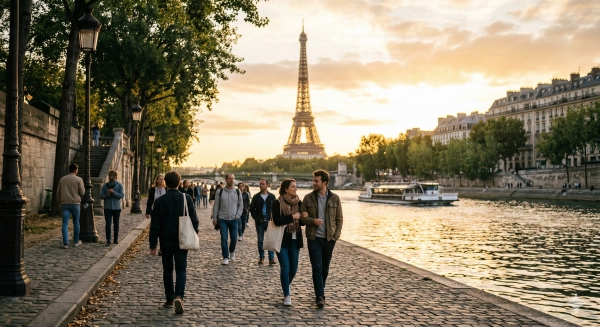
Begin with the Eiffel Tower, which at 324 meters (1,062 feet) offers the broadest urban panorama. Book summit tickets weeks in advance because it sells out fast. Combine it with a stroll up to the Arc de Triomphe for the unforgettable star-shaped road view, then continue down Champs-Élysées to the Seine.
Reserve timed tickets for the Louvre and Musée d’Orsay, 2 to 3 months in advance. Concentrate on one theme at the Louvre, Egyptian art or Italian masters for example, so you won’t become weary. Cross the river to d’Orsay for Impressionists and works from the late 19th century.
Notre-Dame’s parvis and the Île de la Cité still frame medieval Paris, with nearby Sainte-Chapelle’s stained glass a vivid stop. A Seine dinner cruise displays bridges and illuminated facades without additional transfers, which is handy after a museum-laden day.
Add a day trip to Versailles–Château Rive Gauche for the Hall of Mirrors and garden strolls. Pre-book palace entry and arrive before 09:00 to beat tour buses. Include brief photo stops at Place Blanche, Paris Opera, and the Latin Quarter on the same day when you keep routes tight.
Local Living
- Get a café crème in some corner bar. Stand at the counter; it’s faster.
- Explore Marché des Enfants Rouges or Marché Bastille for cheese, fruit, and fresh baguette.
- Take a guided food walk in Le Marais for pâté, éclairs, and natural wine.
A simple rhythm works: morning coffee near your stay, a late-morning museum, then an easy afternoon promenade along the river or Canal Saint-Martin.
Hit up Galeries Lafayette for the stained-glass dome and rooftop view. Then wander back alleys to uncover secret courtyards off Passage des Panoramas or Cour du Commerce-Saint-André. Montmartre and Le Marais preserve winding alleys and ancient stone that reflect the city’s history.
Day Escapes
- Normandy coast: D-Day beaches, windswept cliffs, seafood lunches.
- Bayeux: medieval tapestry, compact old town, easy rail link.
- Giverny: Monet’s house and gardens; go in bloom months.
- Fontainebleau: vast forest hikes plus a lived-in château.
- Seine bike tour: Riverside paths, low-traffic spurs, guided options.
- Private champagne cruise: small-group boat, chilled bottles, and sunset slots.
In four days you can squeeze in the Louvre, d’Orsay, Eiffel Tower, Arc de Triomphe and Versailles at a relaxing pace. The Paris Sewer Museum is worth a visit for a quick, weird but vivid peek at the city’s underworld and engineering narrative.
The Provence Dream
Provence, for its part, rewards slow travel. It’s a big region, so strategize by areas. A car connects hill towns, fields, and coast at your pace. Base in Avignon or Aix-en-Provence for reach, then split the trip: about 4 nights in the Luberon and 2 nights on the coast. Think café pauses, short walks, and market mornings. Provence has been a perennial favorite and travelers have returned for its serene days and rich past.
Market Towns
Markets held weekly are at the heart of local life. Arles is awash with olives, tapenades and Camargue rice. Uzès decorates its arcades with chèvre, stone fruit and linen. Saint-Rémy-de-Provence piles herbs, breads and soaps that smell like the hills. Aix has markets every day, so you can shop light and often.
Taste it before you buy it. Request a piece of tomme, a glass of rosé, or a piece of fougasse. Take a led food tour in Aix or Avignon to discover basic rules on how to select ripe melons by smell, which olive varieties complement fish, and why rosé styles differ by soil.
Free time for makers. Everything from Provençal linens and hand-thrown ceramics to lavender honey and your favorite brocante finds. In the Luberon, pop into Ménerbes and Lacoste for quiet lanes and petite galleries. Take a walk on the Van Gogh Trail in Saint-Rémy, which takes approximately 1 hour, to set the scene before a museum visit.
Lavender Fields
Peak bloom is from late June through early July, with a few fields moving by elevation. For panoramic views, take the scenic D7 toward the Luberon’s low hills. For swaths of color, go around the Valensole plateau. Sault has cooler-air fields that flower a bit later, along with convenient photo pull-offs.
Pair fields with short visits: a Château in Ansouis, a tasting room near Bonnieux, or a lavender distillery demo that shows oil making. Off-season, with its sparse crowds and tender light, even the purple rows repose. Swap pictures for peaceful strolls and leisurely lunches.
Roman Ruins
- Pont du Gard (UNESCO): triple-tier aqueduct, river setting
- Arles Amphitheatre: gladiator-era arena, city views from the top
- Théâtre Antique d’Orange (UNESCO): grand stage wall, summer performances
- Glanum, Saint-Rémy: sacred springs, triumphal arch, close to Van Gogh sites
- Village des Bories, near Gordes: 18th-century dry-stone huts, rural craft
Stroll through UNESCO sites to experience scale, symmetry, and engineering firsthand. In Orange, schedule a matinee or evening show to experience acoustics in action.
The Riviera Lifestyle
A sun-kissed arc of cliffs, beaches and hill towns, the French Riviera effortlessly combines carefree days by the sea with sophisticated resorts and streets lined with art. Summer pulls in the busiest crowds and longest days on the beach, with late spring and early fall offering mild weather and quieter streets. A quick hop from Nice to Saint-Tropez includes marquee stops: Cannes, Antibes, Monaco and secret coves for dips and lunches. Expect diverse days, including urban walks, museum visits, seaside hikes, local markets and fresh seafood with citrus notes from Menton.
Coastal Drives
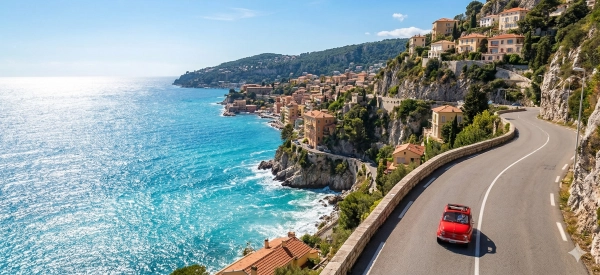
Take the D559 for balcony-like sea views, pine-framed curves and sudden pull-offs for a dip. Tie in pieces of the Route Napoléon inland for rugged ridgelines and slower traffic, then coastside again to keep time in check.
Breaks come easy: pause in Antibes for the old ramparts, slip into Plage de Mariniers in Villefranche-sur-Mer for clear water, or detour to Theoule-sur-Mer’s red rocks. These brief pauses assist in steering clear of midday heat that is common during peak season.
For a one-day map: Start at Nice’s Promenade des Anglais at sunrise, have coffee near the Marché aux Poissons Saint‑François, enjoy a mid-morning swim at Plage de Mariniers, have lunch in Antibes’ old town, take a golden hour stroll on Cannes’ Croisette, and pull off at twilight above Esterel on the D559.
Pack fruit, Menton lemon tart and a baguette for an easy picnic. Seek shade, hydrate, and plan 20 to 30 minute waterfront strolls when light is diffused.
Hilltop Villages
Èze, Saint‑Paul‑de‑Vence and Gourdon provide broad views of the Mediterranean and stone lanes that retain coolness even in summer. These paths are steep, so flat shoes and water are recommended.
Wander medieval streets peppered with tiny galleries, then stop at a café for a light lunch. Local studios almost always greet quick peeks; inquire prior to image taking!
Plan short hops: Èze to Colline du Château hill in Nice for ruins and a city overlook. Saint‑Paul‑de‑Vence to Château Grimaldi in Cagnes‑sur‑Mer for art and local history. Trails between villages are clearly marked. Check heat advisories in summer.
Seaside Glamour
A stroll through Cannes’ Croisette offers people-watching and a peek at the Palais des Festivals. There are events galore with an emphasis on May’s peak season, and the promenade buzzes year round. Beach clubs rent loungers by the hour, so book early for July to August. A private sail or half-day boat hire reveals peaceful inlets that are inaccessible by car.
For dinner, reserve a patio seat — Le Sloop is a relaxed choice — for bouillabaisse, lemon sauces and local olive oil. Nightlife rages late in Nice’s vieille ville, with music spilling into lanes and a welcoming crowd. Sprinkle in cultural stops such as Menton’s Fête du Citron in season and schedule museum hours to counterbalance the beach.
Beyond the Itinerary
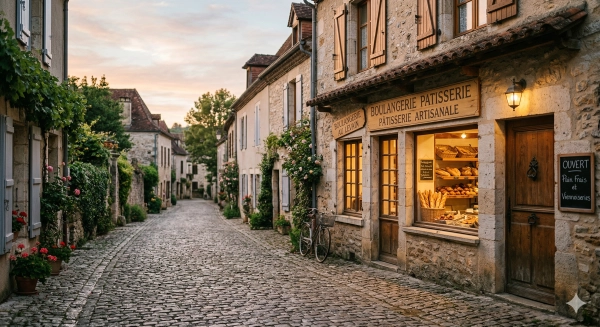
Leave space for detours that give shape to any France itinerary. A structured itinerary can obscure those little things that make a trip feel real, whether it is a farm stand on a country road or a late train that introduces you to a new town.
Leave room for serendipity and off the beaten path experiences. Leave half days open in high sight density, short-hop regions. Provence’s arrière-pays is home to ochre-colored stone hill towns perched above winding lanes where you can discover a boulanger at dawn and a vista at dusk. In Roussillon, the Ochre Trail is a gentle loop through an old quarry and forest. The red and golden cliffs reveal the local geology for all to see. A slow drive or bike ride along the Loire, known as France’s last wild waterway, exposes sandbanks, poplar groves, and châteaux that seem less contrived off-peak. In the Camargue, where long sandy beaches and wild surf confront wetlands, flamingo “flamboyances” number tens of thousands. A sunrise walk frequently trumps any tour. On Arcachon Bay’s fringes, minuscule villages still make their living oyster farming. Sample fresh oyster plateaus with a lemon squeeze at rustic huts overlooking the water.
Think back on your best stops and travel experiences during your trip. Notice what brought joy and why. A peaceful lunch by a village washhouse might beat a world-renowned museum. A dusk walk on a Loire levee or a random conversation in a Languedoc café about Carcassonne and its Cathar heritage can influence where you look next. Bookmark captioned photos, note times and costs in EUR, and record travel times in kilometers to optimize routes.
Think ahead to ideas for your next France sojourn: the Dordogne region or Alsace wine route. Dordogne mixes river bends, cliff towns and cave art museums in tight loops that fit three to five days. Alsace is wonderful by train and bike, connecting villages and vineyards with easy signposting. Sprinkle in the Languedoc for medieval sites beyond Carcassonne, or the Forez for the rare Grotto of the Batie d’Urfé, a Renaissance folly lined with sand and sea shells. Shoot for spring to fall for long days, mild weather and lavender in bloom.
Trust Travel Envy’s experts for stress-free, multi-destination France itineraries. We juggle transit legs, timed entries, and buffers so serendipity still squeezes in.
Conclusion
A wise France itinerary mixes definite decisions with loose scheduling. Choose a theme. Establish a rhythm. Take rail for long hops. Walk or bike through towns. Book key tickets early. Allow spaces for lazy café hours, a beach plunge or a spontaneous cheese detour at a market.
Consider straightforward switches that work with your look. Trade one huge museum for a street art walk in Belleville. Swap a late night in Nice for a dawn swim in Antibes. Trade a long Aix lunch for a market snack and a hill town circuit.
Ready to secure your itinerary? Plan your itinerary, fix dates, book the essentials, then keep one day open each leg. Need assistance polishing it? Enter your dates and wish list.
Frequently Asked Questions
How many days do I need for a balanced France itinerary?
Try to plan for 10 to 14 days. Weave 3 to 4 days in Paris, 3 to 4 in Provence, 2 to 3 on the Riviera, and 1 to 2 for day trips. This itinerary strikes a nice equilibrium of culture, cuisine, and the outdoors at a fair pace.
What is the best time of year to visit Paris, Provence, and the Riviera?
Late April to June and September to early October. Anticipate mild weather, fewer crowds, and improved prices. July to August is hot and busy, particularly on the Riviera. Winter provides cheaper prices but fewer daylight hours.
How should I travel between Paris, Provence, and the Riviera?
Take advantage of the high-speed trains. Paris to Avignon takes 2 hours and 40 minutes. The trip from Avignon to Nice is around 3 hours. Trains are dependable and green. France Travel Itinerary: Rent a Car in Provence for Villages and Lavender.
Is Paris worth more than two days in an itinerary?
Yes. Schedule a minimum of 3 days. Day 1: Landmarks and a Seine cruise. Day 2: Museums and neighborhoods. Day 3: Food markets and hidden streets. Additional time allows you to savor cafés and local life.
How can I avoid crowds at top attractions?
Make timed ticket reservations online. Go early morning or late afternoon. Visit smaller museums and neighborhoods. Travel in the shoulder seasons. Weekdays are less crowded than weekends.
What should I budget per day in France?
Budget 120 to 200 EUR a day per person, not including flights. That includes mid-range accommodations, trains, food, and attractions. Get discounts with set lunch menus, public transport, and advance bookings.
Do I need to speak French to travel comfortably?
Not necessary, but useful. Know fundamentals such as bonjour, s’il vous plait, and merci. Most service staff speak English in the main hubs. Kind salutations make the experience better on both the service and the human connection side.
Not what you were looking for? Explore Travel Envy’s curated travel resources for expert itinerary planning and seamless global escapes.
Popular Adventurous Destination
Comprehensive Travel Planning Services
Looking for official destination details? Browse government tourism sites and educational resources for accurate, up-to-date Europe travel information.
Official Overview of Schengen Area Travel Regulations